
The Best Window Cleaning Solution for Streak-Free Windows (Plus the Tools & Recipes That Actually Work)

This post contains affiliate links. If you make a purchase through one of these links, we may earn a small commission at no extra cost to you. We only recommend products we genuinely like and would use ourselves.
Quick answer: Start with the mild cleaner approved for your window glass, then remove it with a clean microfiber cloth or squeegee. Below are two manufacturer-supported homemade options, the limits for coated glass, and practical steps to reduce streaks.

Quick answer: A good window cleaning solution can be homemade with manufacturer-supported options. Pair it with the right tools, like a squeegee used correctly, for streak free windows.
What Makes a Good Window Cleaning Solution
Choose a window cleaning solution for the dirt you need to remove and the glass you actually have. Manufacturer approval matters more than whether a bottle says homemade, natural, or professional. Cleaners suitable for ordinary glass may be unsuitable for a coating or film.
If you’re already following a weekly home reset checklist, windows are an easy category to fold into that routine rather than treating them as a once-a-year deep-clean project.
Homemade Window Cleaning Solution: 2 Manufacturer-Supported Options
Check your window manufacturer’s care instructions before choosing a homemade window cleaning solution.
1. Mild dish soap and water
Marvin’s window-cleaning guide suggests one teaspoon of mild dishwashing soap in five gallons of warm water. This is a bucket recipe: keep the soap dilute and remove the solution with a clean cloth or squeegee.
2. White vinegar and water, where approved
Andersen lists equal parts distilled white vinegar and water among its approved options for many of its products. For a small batch, use one cup of each. This does not apply to its HeatLock glass, which requires mild soapy water. Follow the instructions for your own glass and frames.
Use these as separate options. Do not add bleach, peroxide, ammonia, alcohol, or abrasive powders to these recipes.
Want full recipes, including a cornstarch mix that helps stop fingerprints? See my homemade window cleaner guide.
Window Cleaning Tools You Actually Need
A great window cleaning solution only gets you halfway there: the tools you use to apply and remove it matter just as much. Here’s the basic toolkit:
- A spray bottle for even application
- A squeegee for pulling the liquid off in clean, streak-free lines
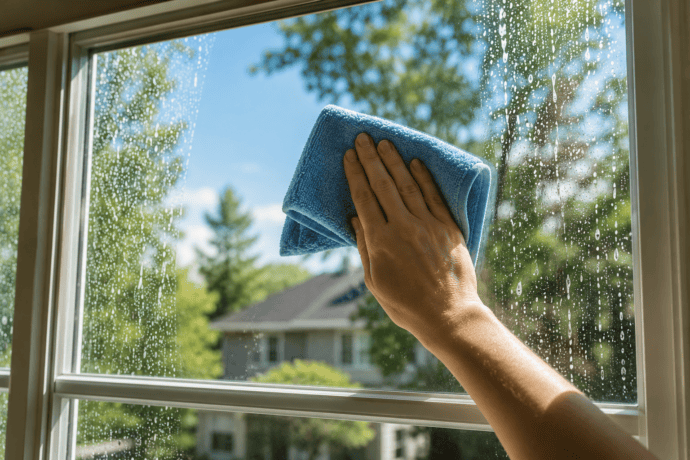
- A microfiber cloth for edges, corners, and any final touch-ups
- A bucket if you’re working on multiple windows and want to dip your squeegee between passes
If you’re building out a full cleaning kit, it’s worth pairing your window tools with the same vacuum and mop setup you already use for floors: keeping everything in one caddy makes it much more likely you’ll actually stick to a regular cleaning rhythm instead of only doing windows once a year.
Squeegee for Window Cleaning: How to Get It Right
The squeegee is the single most important tool for applying a window cleaning solution without leaving streaks behind. Here’s the technique professionals use:
- Spray your chosen formula generously across the glass.
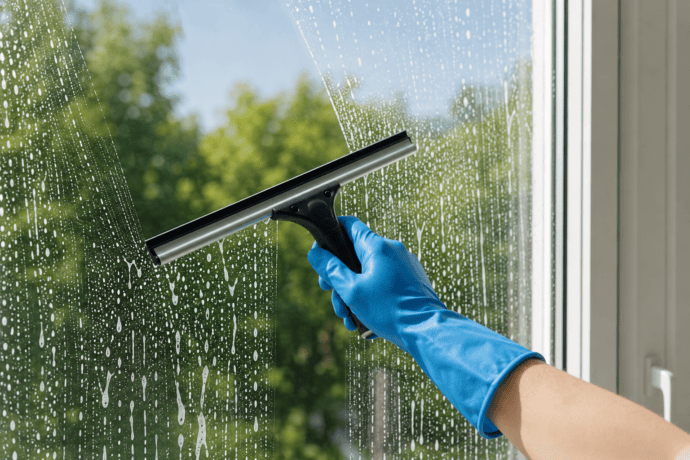
- Starting at the top corner, pull the squeegee across in one straight horizontal line.
- Wipe the blade clean with a cloth after every pass: a dry blade is what actually prevents streaking, not the cleaner itself.
- Work top to bottom in overlapping strokes until the entire pane is clear.
- Use a dry microfiber cloth to catch any drips along the edges and windowsill.
This same top-to-bottom, wipe-the-blade-often method applies no matter which window cleaning solution you’re using, whether it’s a store-bought spray or one of the homemade recipes above.
Magnetic Window Cleaner: The Best Tool for Second-Story Windows
If you have windows that are difficult or unsafe to reach from outside, a magnetic window cleaner solves a problem no squeegee can. These tools use two magnetic pads, one for the inside, one for the outside, that stay aligned through the glass. You apply your window cleaning solution to both the interior and exterior side, place the pads on the glass, and move the indoor pad; the magnetic pull carries the outdoor pad along with it, cleaning both sides at once.
According to Window Genie’s breakdown of how magnetic window cleaners perform, the strength of the magnets determines how thick a window pane the tool can handle, so it’s worth checking your glass thickness before buying one. Most models also come with a safety rope, which you should always attach: if the magnetic connection breaks momentarily, you don’t want the outdoor pad falling.
One limitation worth knowing: if a window doesn’t open, there’s no way to get the exterior pad in place without a ladder, so magnetic tools work best for windows you can crack open from the inside.
Outdoor Window Cleaner Tips & Safety
Applying a cleaner to exterior glass comes with a different set of challenges than indoor windows: wind, dust, pollen, and hard-to-reach second-story panes all complicate things.
A few tips for outdoor window cleaning:
- Rinse the glass with a hose first to knock off loose dirt before applying your cleaner: this prevents you from just smearing grit across the surface.
- Use an extension pole with your squeegee for ground-floor windows instead of leaning a ladder against the house.
- For upper floors, a magnetic window cleaner or a pole-mounted squeegee is a much safer choice than climbing.
- Work in sections and keep a bucket of clean water nearby to rinse your tools between windows.
If you’re already in the habit of tackling grease and grime in the kitchen, the same principle applies here: cutting through buildup works best with a two-step process: loosen it first, then wipe it away, rather than scrubbing everything in one pass.
Choosing the Right Formula for Different Surfaces
Check the care instructions for tinted film, coated glass, mirrors, and frames before applying a cleaner. A formula approved for one window may be unsuitable for another. Andersen, for example, specifies mild soapy water for HeatLock glass. Protect surrounding trim from runoff and dry the frames after cleaning; vinyl or aluminum frames do not make every cleaner suitable.
Quick Guide by Surface
- Standard clear glass: Mild dish soap and water works for most routine cleaning. Wipe dry with a clean microfiber cloth or squeegee to avoid streaks.
- Tinted or filmed windows: Window film makers usually recommend a soft cloth and a gentle, ammonia-free cleaner, and many advise waiting after installation before cleaning. Check the film’s care sheet first.
- Coated or specialty glass: Follow the window manufacturer’s instructions, as coatings and finishes differ. If you cannot find them, plain mild soapy water is the safer starting point.
- Mirrors: Spray the cloth rather than the mirror so liquid does not run behind the edges and damage the backing.
- Screens and frames: Use a soft brush and mild soapy water, rinse lightly and dry the frames so water does not sit in tracks.
Storing Leftover Mixture
Mix only what you need for the cleaning session. If you keep any mixture, label the container clearly and keep it away from children and pets. Follow the storage directions for commercial products; this guide does not establish a shelf life for homemade cleaners.
How Often Should You Clean Your Windows?
Most homes only need a full window cleaning session two to four times a year: typically at the change of seasons. That said, high-traffic areas like kitchen windows, sliding glass doors, and any glass near a fireplace or stovetop tend to collect grease film much faster and benefit from a quick pass every month. Keeping a spray bottle of your window cleaning solution under the sink makes it easy to wipe down a smudged pane in under two minutes rather than waiting for it to build up into a bigger job. This is the same logic behind cleaning your house fast: small, frequent touch-ups beat one exhausting deep clean.
Common Mistakes People Make
Even with the right formula, a few habits can undo all your effort:
- Cleaning in direct sunlight. Heat dries the solution too fast, leaving streaks behind almost every time.
- Using paper towels instead of microfiber. Paper towels shed lint and fibers that stick to the glass.
- Skipping the squeegee wipe-down. A dirty blade just drags grime back across the window.
- Over-spraying. More product doesn’t mean a cleaner window: it just means more liquid to squeegee off, which increases the chance of streaking.
- Ignoring the frame and sill. A spotless pane surrounded by a dusty sill still looks unfinished.
Keeping windows on a regular rotation, rather than only reaching for a window cleaning solution when they’re visibly dirty, makes the whole task faster every time, similar to how easy daily cleaning habits keep the rest of the house from piling up.
Quick FAQ
Can I clean windows without vinegar?
Yes. A dilute mild dish-soap solution is an option in Marvin’s guide. Check your own window’s care instructions and remove the solution with a clean cloth or squeegee.
Why do my windows still have streaks?
Try cleaning in shade, working on one window at a time, and using a clean, dry section of cloth. Wipe a squeegee blade between overlapping passes.
Will cleaner remove fog between double-pane windows?
No. Marvin identifies fogging between sealed panes as a possible seal failure. Cleaning the accessible glass surfaces will not remove moisture trapped inside the unit.
Bringing It All Together
Streak-free windows really come down to three things: a good formula, the right tools (squeegee, microfiber, and a magnetic cleaner for hard-to-reach panes), and a technique that avoids the most common mistakes like cleaning in direct sun or skipping the squeegee wipe-down. Whether you stick with a store-bought spray or mix up one of the homemade recipes above, consistency matters more than the specific window cleaning solution you choose.
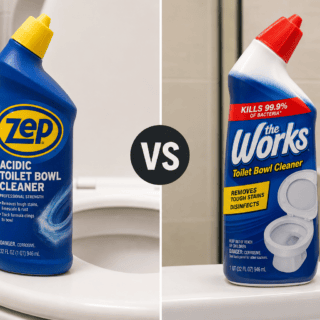
For a deeper comparison of cleaning product performance, it’s worth reading how we broke down two popular options in our Zep vs. The Works comparison. This separate guide compares manufacturer information and published sources; the products were not personally tested for that post.
Related Reading
- Mudroom Storage for Shoes: The Complete Organization Guide That Actually Works
- Kitchen Hood Cleaning: The Deep-Clean Method That Actually Cuts Through Grease
- How to Get White Clothes White Again: 7 Easy Methods That Actually Work
- Homemade Window Cleaner: 3 Easy Recipes for Streak-Free Windows
Our Favorite Window Cleaning Tools & Products
As an Amazon Associate, we earn from qualifying purchases. If you buy through these links, we may earn a commission at no extra cost to you.


4 Comments