
How to Clean a Glass Stove Top: Easy Step-by-Step Guide
This post contains affiliate links. If you make a purchase through one of these links, we may earn a small commission at no extra cost to you.
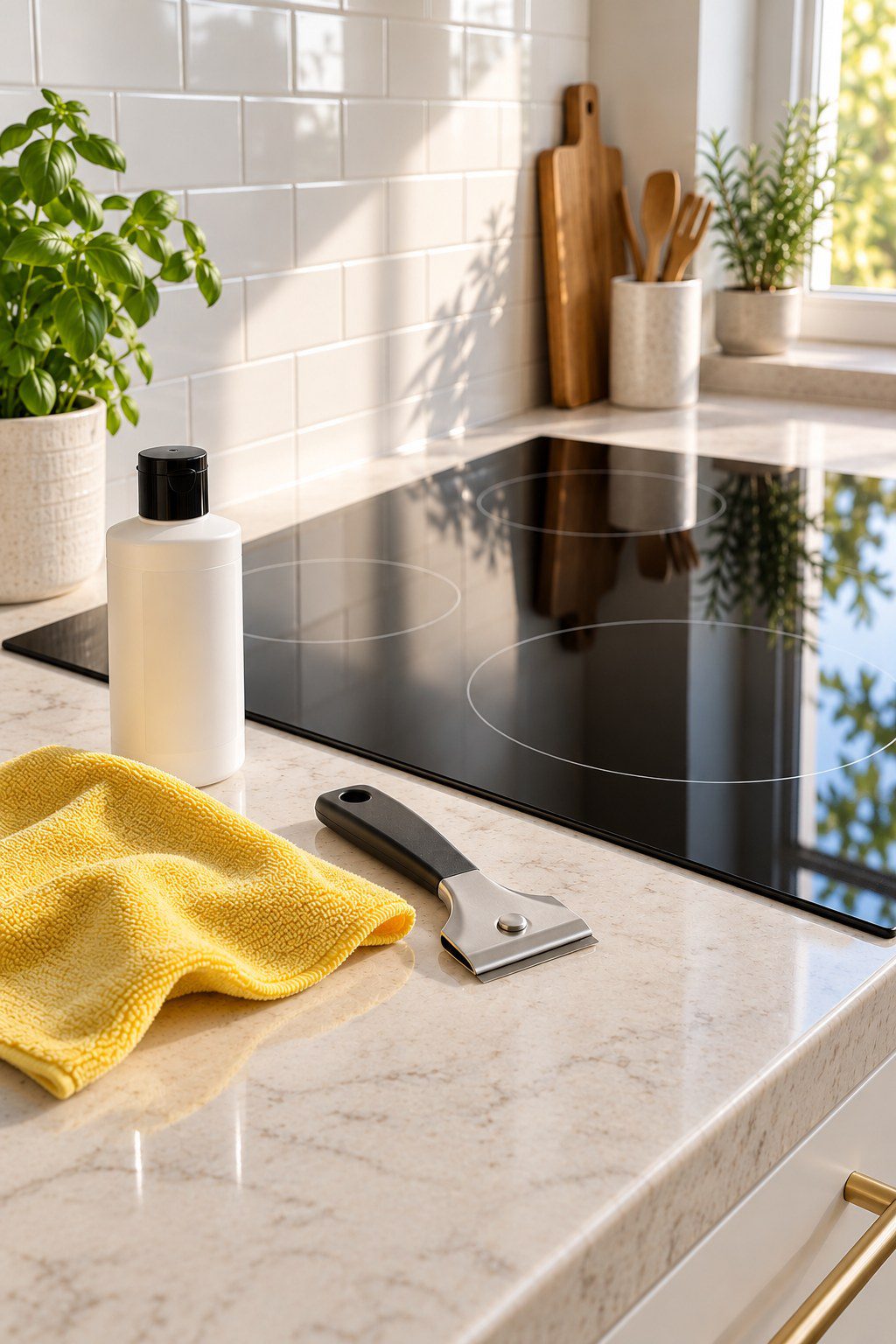
Knowing how to clean a glass stove top the right way keeps it looking new and protects the surface from scratches. The glossy finish shows every drip, fingerprint and burnt-on spot, but it is also easy to damage with the wrong tools. This guide covers how to clean a glass stove top step by step, from a quick daily wipe to stubborn burnt-on stains, plus natural options, induction tips and what to avoid.
Quick answer: To clean a glass stove top, let it cool, wipe it with warm water and dish soap, scrape burnt-on residue at about a 45 degree angle with a cooktop scraper, rub in a cooktop cleaner, and buff dry with a clean microfiber cloth. Never use steel wool, abrasive powders or ammonia.
Before you start: what to know about glass stove tops
Most flat stove tops are made of ceramic glass. Some are radiant electric and some are induction, and both clean the same way. A few basics make every method below work better and keep the glass safe:
- Turn all controls off and make sure no burner is still hot.
- Check your manual. The maker of your cooktop may recommend a specific cleaner or tool.
- Use soft cloths, ideally microfiber, so you do not scratch the surface.
- Remove loose crumbs first so you do not drag them across the glass.
How to clean glass stove top surfaces: everyday method
This is the routine to use after cooking or once a week for light dirt. It takes about five minutes.
- Let the surface cool completely and brush or wipe away loose crumbs.
- Add dish soap to a damp cloth or a soft sponge and wipe the whole surface in overlapping strokes. Remove the knobs if your stove has them and clean underneath.
- Wipe again with a wet microfiber cloth to lift the soap and see what stains are left.
- Dry with a clean, dry microfiber cloth. Drying is what prevents streaks and water marks.
If you want a deeper shine, finish with a small amount of cooktop cleaner (see the steps below) instead of plain water.
How to clean glass stove top burn marks and burnt-on stains
For stuck-on food and burnt residue, soap alone is rarely enough. Follow the method recommended by appliance makers such as Whirlpool:
- Scrape. Use a scraper made for glass cooktops. Hold it at about a 45 degree angle and apply light, steady pressure. Do this while the surface is warm, not hot, and wear an oven mitt. Let it cool before the next step.
- Clean. Put a few dime-sized drops of cooktop cleaner on the stain and rub it in with a non-scratch pad or cloth, using firm pressure on stubborn spots. Let it dry to a light haze.
- Polish. Buff with a clean, dry cloth until the glass is clear.
- Repeat on heavy stains rather than pressing harder.
Sugary spills such as jam or syrup need quick attention. If they cool and harden on the glass, they can be hard to remove, so scrape them off while the surface is still warm, not hot.
The Detangled Nest Picks
Everything You Need for a Glass Stove Top
Affiliate links. We may earn a small commission at no extra cost to you.
Weiman Cooktop Cleaner and Polish
Cleans, polishes and protects glass and ceramic cooktops.
Cerama Bryte Scraper and Pad Kit
Lifts burnt-on residue safely without scratching the glass.
How to clean glass stove top with baking soda and vinegar
If you prefer a natural option for light stains, baking soda and vinegar is a gentle choice. It works best on fresh grease and light residue, not on heavy burnt-on food.
- Wipe away crumbs and sprinkle a thin layer of baking soda over the stained areas.
- Spray lightly with white vinegar, or dampen a cloth with it, and let it fizz for a minute.
- Lay a warm, damp microfiber cloth over the area for about 10 to 15 minutes.
- Wipe in gentle circles, rinse the cloth, and wipe again with plain water.
- Dry and buff with a clean dry cloth.
Rub gently. Baking soda is a mild abrasive and should never be scrubbed hard into the glass. For other natural cleaning mixes, see our homemade window cleaner recipes, which also work for glossy surfaces.
How to clean glass stove top and induction cooktops
An induction cooktop heats the pan, not the glass, so spills usually bake on less than on a radiant electric stove. That makes clean-up easier, but a few habits still matter:
- Wipe spills as soon as the surface is cool, before they dry.
- Use the same everyday method above: dish soap, a wet microfiber cloth, then a dry cloth.
- Lift pans instead of sliding them. Rough pan bottoms are a common cause of fine scratches.
- Check that pan bottoms are clean and dry before you place them on the glass.
What to avoid when cleaning a glass stove top
- Steel wool and rough scouring pads. They scratch the glass.
- Abrasive powder cleansers.
- Chlorine bleach, rust remover and ammonia. Whirlpool lists these as products to avoid on ceramic glass cooktops.
- Cleaning a hot surface. Let it cool, except when scraping a sugary spill with an oven mitt.
- Dragging pans across the glass.
- Metal tools at a steep angle. Only use a scraper made for cooktops, held at about 45 degrees.
Non-abrasive cleaners and tools for a glass stove top
You do not need many products. These are the ones that match the steps above:
- A cooktop cleaner and polish for burnt-on stains and a clear shine.
- A cooktop scraper and pad kit made for glass-ceramic surfaces.
- A pack of lint-free microfiber cloths for wiping and buffing.
How to clean a glass stove top without scratching it
Most damage happens because of the tools, not the dirt. If you want to learn how to clean glass stove top surfaces safely, start with the gentlest option and only step up when you need to.
- Start soft: warm water, a drop of dish soap and a microfiber cloth handle most daily messes.
- Use a flat razor scraper only at a low angle: keep it close to flat against the glass and push in one direction. Never dig in with a corner.
- Skip rough pads: use a non-scratch pad made for cooktops, not a kitchen scouring pad.
- Lift pots instead of sliding them: dragging cookware, especially pans with rough bottoms, is a common cause of fine scratches.
- Keep pan bottoms clean and dry: residue on the base of a pot burns onto the glass the next time you cook.
Sugary spills and melted plastic: act fast
Some spills are worse than others. Sugar, syrup and melted plastic can pit the glass as they cool, so they need attention right away. Turn off the burner, then follow the manufacturer’s guidance: use a heat-safe tool such as the scraper, and take care because the surface can still be very hot. Once the spot has cooled, finish with your usual cooktop cleaner. If you are unsure, check your stove’s manual, since models differ.
Cloudy streaks, water spots and white residue
A hazy look usually means a thin film of cleaner, hard water or cooking oil. The fix is simple: wipe with a cloth dampened with warm water, apply a small amount of cooktop cleaner, and buff dry with a clean, dry microfiber cloth. A light spray of diluted white vinegar can also cut mineral spots, and it follows the same logic as my homemade glass cleaner. Always wipe away every trace afterward so nothing bakes on the next time the burner heats up.
Daily habits that make cleaning a glass stove top easier
The easiest way to keep a glass cooktop clean is to not let the mess build up. A few habits keep the work to under a minute:
- Wipe spills once the burner has cooled, before they get baked on.
- Do a quick damp wipe after dinner, then buff dry.
- Deep clean with cooktop cleaner once a week if you cook daily.
- Clean the rest of the cooking zone too. Grease from the range hood and the oven can drip or drift onto the cooktop, so cleaning them on a schedule helps.
Final thoughts on how to clean glass stove top surfaces
Knowing how to clean glass stove top surfaces comes down to three rules: let it cool, use non-abrasive products, and never let spills sit. With a scraper, a good cooktop cleaner and a soft cloth, even stubborn marks come off without harming the glass. If you want a quick starting point, try the Weiman cooktop cleaner together with a microfiber cloth, and keep the routine consistent.
How often should you clean a glass stove top?
Wipe the surface after each use once it has cooled, so spills never get a chance to bake on. Do the full everyday method once a week, and use the burnt-on stain method only when you need it. Regular light cleaning is far easier on the glass than occasional heavy scrubbing.
Frequently asked questions
Can I use vinegar on a glass stove top?
Yes, diluted white vinegar is commonly used for light cleaning and to cut grease. Wipe it off with a damp cloth afterwards and dry the glass. Check your manual if you are unsure.
Is baking soda safe for a glass stove top?
A thin layer used gently is generally fine for light stains. Do not scrub hard, since baking soda is mildly abrasive.
How do I remove scratches from a glass stove top?
Deep scratches cannot be removed. A cooktop cleaner and polish can make light marks and residue less visible. Prevent new ones by lifting pans and using only soft cloths.
How to clean glass stove top naturally?
Use warm water with a little dish soap for everyday cleaning, and baking soda with vinegar for light stains. For heavy burnt-on food, a cooktop scraper and cleaner work better.