
How to Clean a Dishwasher (Yes, It Needs Cleaning Too)

It sounds backwards: the machine whose entire job is to clean things needs to be cleaned itself. Learning how to clean a dishwasher properly is one of those small habits that makes a bigger difference than people expect: food particles, grease, soap scum, and hard-water minerals build up inside every dishwasher over time, usually hiding in three places: the filter, the door gasket, and the spray arms. That buildup is exactly why dishes sometimes come out cloudy, your kitchen smells faintly off, or the dishwasher just doesn’t seem to clean like it used to. The good news: once you know how to clean a dishwasher the right way, a full clean takes about 20 minutes, needs no special tools, and only has to happen once a month.  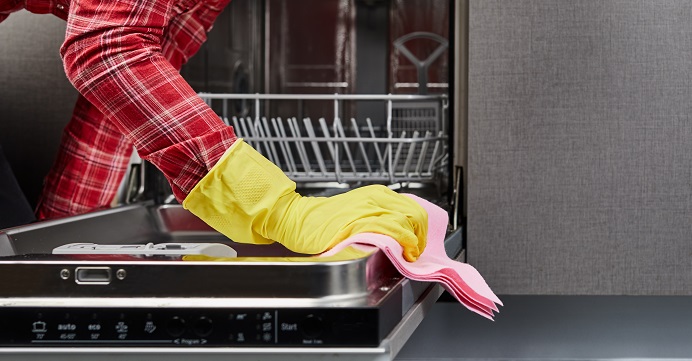
Why You Need to Clean a Dishwasher Regularly
A dishwasher cleans your dishes with hot water and detergent, but it doesn’t fully rinse itself in the process. Grease, food debris, and mineral deposits from hard water settle into the filter and along the seals every single cycle. Over weeks, that residue turns into the cloudy film or musty smell most people assume means something is “broken”: when really, it just means it’s time to clean a dishwasher the proper way. Most manufacturers recommend cleaning a dishwasher about once a month, with a quick filter check more often if you run it daily.
Signs Your Dishwasher Needs a Deep Clean
- Dishes come out with a cloudy or gritty film
- There’s a musty or sour smell when you open the door
- Standing water sits at the bottom after a cycle
- Visible grime or food debris around the door seal
What You’ll Need
- White vinegar
- Baking soda
- An old toothbrush
- A microfiber cloth
- A dishwasher-safe bowl or measuring cup
Note: skip the bleach if your dishwasher has a stainless steel interior: bleach can react with stainless steel and damage the finish over time. Vinegar and baking soda are gentle enough for any interior and just as effective for routine cleaning.
On the shelf
Shop this clean
As an Amazon Associate, we earn from qualifying purchases.


Products That Make This Easier
As an Amazon Associate, we earn from qualifying purchases.
- Affresh Dishwasher Cleaner Tablets: the #1 dishwasher cleaner recommended by Whirlpool, KitchenAid, and Maytag; a convenient monthly alternative to measuring out vinegar and baking soda.
- Distilled White Vinegar, 1 Gallon: an affordable, natural option for the vinegar cycle in Step 2, with plenty left over for other cleaning tasks around the house.
- OXO Good Grips Deep Clean Brush Set: the large brush handles the door gasket and edges, while the small brush is perfect for the filter and tight corners.
- Dishwasher Clean/Dirty Magnet Sign: a small but genuinely useful addition once your dishwasher is sparkling, so the whole household always knows what’s inside.
How to Clean a Dishwasher: Step-by-Step
The full process below covers the filter, a vinegar cycle, a baking soda cycle, the door gasket, and the spray arms: the five spots that matter most.
Step 1: Clear and Clean the Filter
This is the single most important step, and the one most people skip entirely.
- Remove the bottom rack to access the filter, usually located on the floor of the dishwasher under the spray arm.
- Twist or lift it out according to your manual: most filters release with a simple quarter-turn.
- Rinse it under hot running water, using an old toothbrush to clear any trapped food, glass shards, or debris.
- For stubborn buildup, soak the filter in warm water with a splash of vinegar for 15–20 minutes before scrubbing again.
- Wipe down the housing it sits in: this area collects just as much grime as the filter itself.
- Reinsert the filter securely before moving on.
Step 2: Run a Vinegar Cycle
- With the dishwasher completely empty, place a dishwasher-safe bowl filled with 1–2 cups of white vinegar upright on the top rack.
- Run a hot, normal cycle with the heated-dry option turned off and no detergent added.
- The vinegar will circulate through the spray arms, cutting through grease and breaking down hard-water buildup and old detergent residue.
Step 3: Run a Baking Soda Cycle
- Once the vinegar cycle finishes, sprinkle about 1 cup of baking soda along the bottom of the empty dishwasher.
- Run a short, hot cycle.
- The baking soda lifts remaining stains and neutralizes lingering odors, leaving the interior smelling genuinely clean rather than just masked.
Important: never combine vinegar and baking soda in the same cycle, or with bleach: run them separately for the best result, and for safety. 
Step 4: Scrub the Door Gasket and Edges
The rubber seal around the door traps moisture, food residue, and grime: and it’s a common source of lingering odor even after the cycles above.
- Dip an old toothbrush in a little white vinegar or a baking-soda paste.
- Gently scrub along the entire gasket, paying attention to the folds and corners.
- Wipe away loosened residue with a damp microfiber cloth.
Step 5: Check the Spray Arms
Blocked spray arm holes are a common, overlooked reason dishes stop coming out fully clean.
- Slide out the spray arm (most simply lift or unclip).
- Hold it up to the light and check each small hole for trapped debris.
- Use a toothpick or thin skewer to clear any blockages, then rinse under running water.
Step 6: Wipe Down the Exterior
Finish with a damp microfiber cloth and warm soapy water on the door, handle, and control panel. For stainless steel exteriors, wipe in the direction of the grain with a stainless-steel-safe cleaner to avoid streaking. 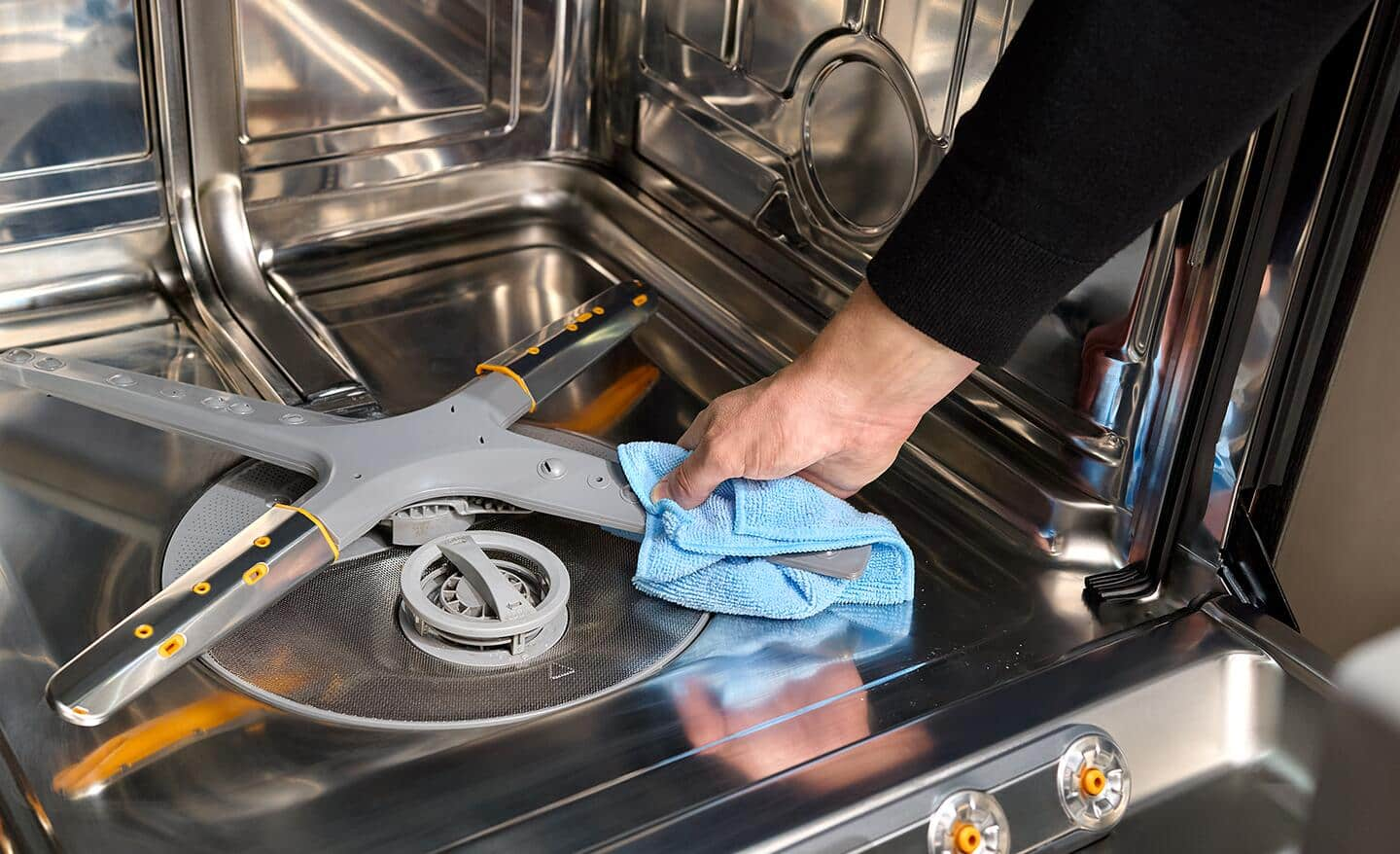
How to Keep a Clean Dishwasher Between Deep Cleans
- Scrape, don’t rinse, before loading: a quick scrape of food scraps is enough; heavy pre-rinsing isn’t necessary for most modern dishwashers and just adds extra residue to the filter.
- Check the filter weekly if you run the dishwasher daily.
- Wipe the gasket dry after the last load if you notice condensation building up.
- Run a hot wash occasionally, even if you typically use an eco or cold cycle, to help flush out grease and buildup.
- Leave the door cracked open after the cycle ends so the interior can air out instead of staying damp.
How to Clean a Dishwasher: Frequently Asked Questions
How often should I clean a dishwasher? A full deep clean, filter, vinegar cycle, baking soda cycle, and gasket, about once a month is the general guideline most manufacturers recommend. If you have hard water or run the dishwasher daily, checking and rinsing the filter weekly helps prevent buildup between deep cleans. Why does my dishwasher smell bad even though it’s “clean”? Lingering odor almost always comes from the filter or the door gasket: two spots that trap food debris and moisture but rarely get touched during a normal cycle. Going back over both specifically, as in the steps above, usually resolves it. Can I use bleach to clean a dishwasher? It’s best avoided, especially in dishwashers with a stainless steel interior, where bleach can cause discoloration or weaken the finish over time. Vinegar and baking soda clean and deodorize just as effectively without that risk. Do dishwasher cleaning tablets work better than vinegar and baking soda? They’re more convenient and a good option if you’d rather not measure anything out, but they’re not necessarily more effective: both approaches target the same buildup. Many people use tablets for a quick monthly clean and the vinegar-and-baking-soda method when they want a deeper, more thorough reset. 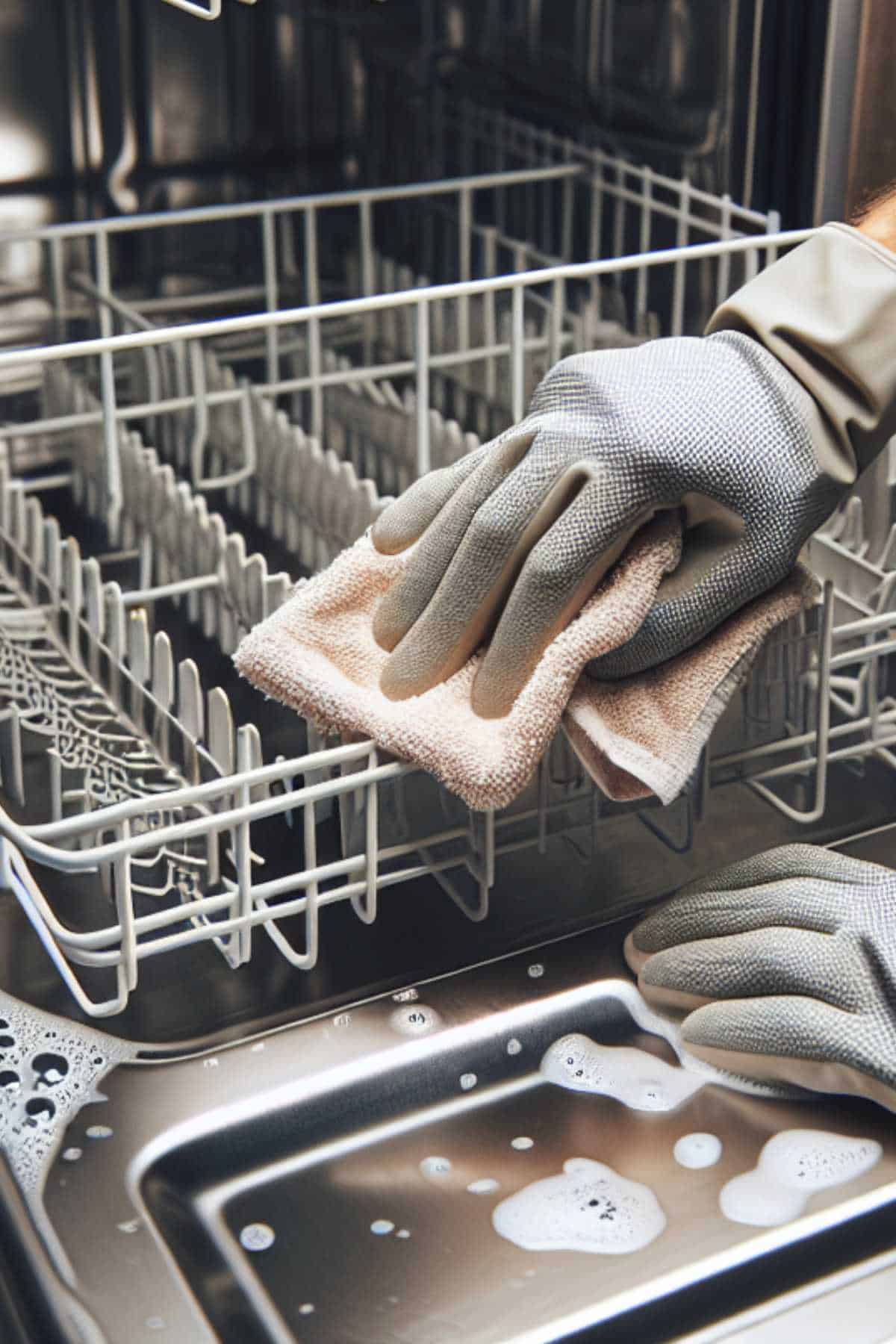
The Bottom Line
Now that you know how to clean a dishwasher properly, not just run it, you’ll notice cleaner dishes, no mystery smell, and an appliance that lasts longer. Block out 20 minutes once a month for the filter, a vinegar cycle, a baking soda cycle, and the gasket, and you’ll feel the difference on your very next load. This pairs well with 10 Minimalist Kitchen Habits and Best Bathroom Cleaning Products if you’re building out a full home cleaning routine.



1 Comment