The Simple Kitchen Cleaning Kit for a Calm, Rustic Kitchen
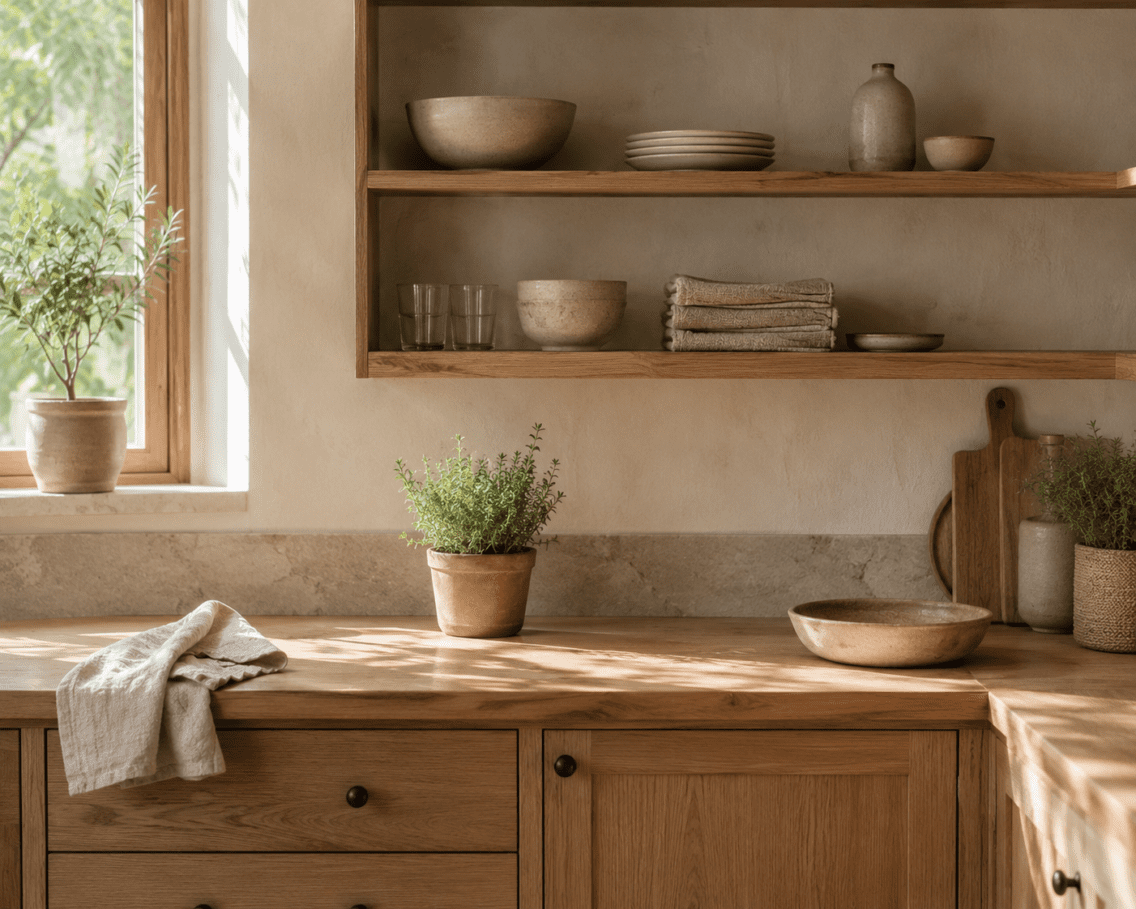
Rustic kitchen cleaning doesn’t have to mean a cabinet full of sprays. There’s something about a rustic kitchen — the warm wood, the natural stone, the lived-in feel — that makes it the heart of a home. If you’ve been pulling together rustic kitchen ideas of your own, you already know it’s a kitchen that doesn’t forgive harsh, generic cleaners the way a sleek modern one might. Wood cabinets, butcher block counters, natural stone — they all need a gentler hand, and honestly, fewer products than you’d think.
I used to keep a different spray for almost everything in my kitchen. What I learned, slowly, is that most of those bottles were doing the same basic job, and a few of them were quietly working against the exact materials I was trying to protect. (If you’re curious about making your own, I’ve also shared my DIY natural cleaning spray recipe — it’s become a staple in this kit too.)
Here’s the small kit that actually keeps a rustic kitchen clean — and a few things worth knowing before you reach for whatever’s under the sink.
As an Amazon Associate, I earn from qualifying purchases. Some links in this post are affiliate links, which means I may earn a small commission at no extra cost to you.
Rustic kitchen cleaning: what it actually needs
Rustic kitchen cleaning comes down to working with natural materials, not against them — wood, stone, sometimes butcher block or open shelving — and those materials are exactly what most all-purpose cleaners aren’t built for. The goal isn’t more products. It’s the right few, used the right way.
1. A gentle, all-purpose cleaner for everyday surfaces
For laminate counters, sealed surfaces, and quick daily wipe-downs, a simple all-purpose spray handles most of what comes up day to day.
2. A degreaser, just for the stove
Rustic kitchens often mean more cooking, more cast iron, more grease that builds up on the stovetop and range hood. One product, used occasionally, does this job well — I keep Krud Kutter in the cabinet for exactly this and nothing else.
3. A wood-safe soap for cabinets and butcher block
This is the one a lot of people get wrong — reaching for an ammonia-based cleaner or anything too harsh strips the finish on wood cabinets over time. A gentle wood soap like Murphy’s Oil Soap, used sparingly, keeps wood looking warm instead of dull.
4. A pH-neutral stone cleaner, if you have natural stone counters
Granite, marble, soapstone — all common in rustic kitchens, and all sensitive to acidic cleaners. A pH-neutral stone cleaner is the one true must-have if your counters are natural stone.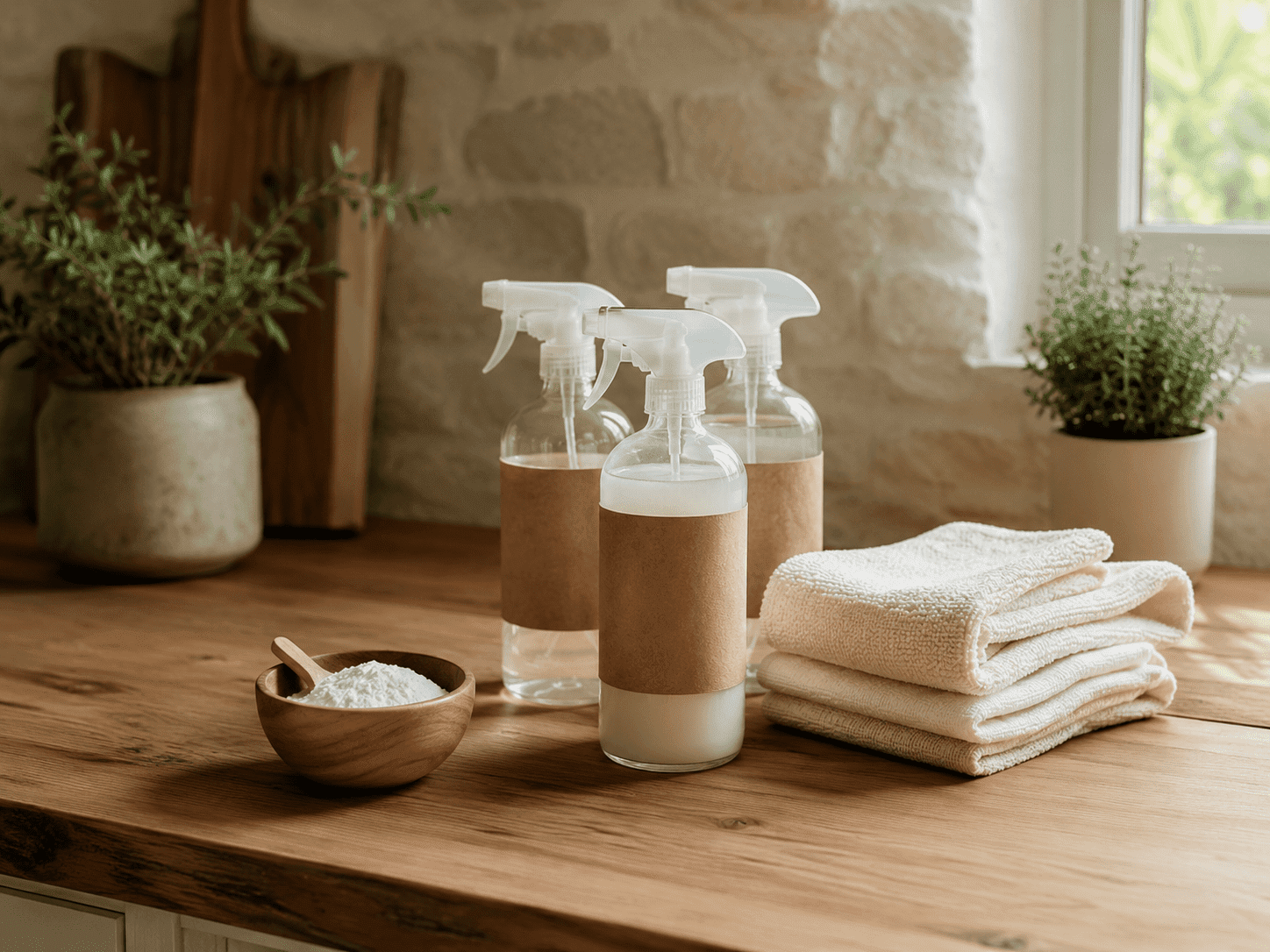
5. Distilled white vinegar
For the inside of the microwave, descaling the coffee maker, cutting through hard water spots — vinegar does more here than almost anything else in the kit. Just keep it away from wood and stone.
6. Baking soda
Pairs with vinegar for the gentle scrubbing jobs — stuck-on grime in the oven, stovetop grates, cast iron that needs a little coaxing without scratching it.
7. Microfiber cloths
A simple stack of microfiber cloths replaces paper towels, wipes down wood without leaving streaks, and lasts for years instead of a roll at a time.
That’s the whole kit — seven items, almost everything covered.
What to avoid on rustic kitchen surfaces
Good rustic kitchen cleaning is as much about what you skip as what you use. The materials that make a rustic kitchen feel warm and natural are the same ones that get damaged easiest by the wrong product:
- Vinegar or anything acidic on natural stone — it etches and dulls the surface permanently. Stick to a pH-neutral cleaner instead.
- Ammonia-based cleaners on wood cabinets — they strip the finish over time, even with occasional use.
- Abrasive scrubbers on cast iron or stainless — they scratch the surface and undo the seasoning on cast iron.
- Bleach near natural stone — like vinegar, it breaks down sealant and can discolor the stone.
A good rule for a rustic kitchen: if it’s natural, treat it gently. If it’s sealed or synthetic, your everyday all-purpose cleaner is usually fine. (This same “less, but intentional” approach is also at the heart of the OHIO Method for keeping a home calm without constant cleaning marathons.)
Frequently Asked Questions
What’s the best way to clean wood cabinets in a rustic kitchen? The short answer for rustic kitchen cleaning on wood is: go gentle. A gentle, wood-safe soap used sparingly is best. Avoid ammonia-based cleaners and anything too harsh — they strip the finish over time and leave wood looking dull instead of warm.
Can I use vinegar on natural stone countertops? No. Vinegar is acidic and will etch and dull granite, marble, or soapstone over time. Use a pH-neutral stone cleaner instead.
How do I keep a rustic kitchen looking clean without a cabinet full of products? Rustic kitchen cleaning really only needs a small kit — a gentle all-purpose cleaner, a degreaser, a wood-safe soap, vinegar, baking soda, and good cloths — covers almost everything. Most kitchens don’t need more than that.
Is butcher block cleaned the same way as wood cabinets? Mostly, yes — a gentle, non-acidic cleaner. Butcher block also benefits from occasional oiling to keep the wood from drying out, which cabinets don’t need as often.
The bottom line
Rustic kitchen cleaning doesn’t need a harsh, modern routine to keep things spotless — it needs a few gentle, intentional products that respect the natural materials doing the work to make it feel warm in the first place. Less in the cabinet, more care where it actually matters. For more small, calming routines like this one, you might also enjoy 12 Simple Home Rituals for bringing more ease into everyday home life.