
Homemade Bathroom Cleaner: Vinegar and Baking Soda Recipes That Work
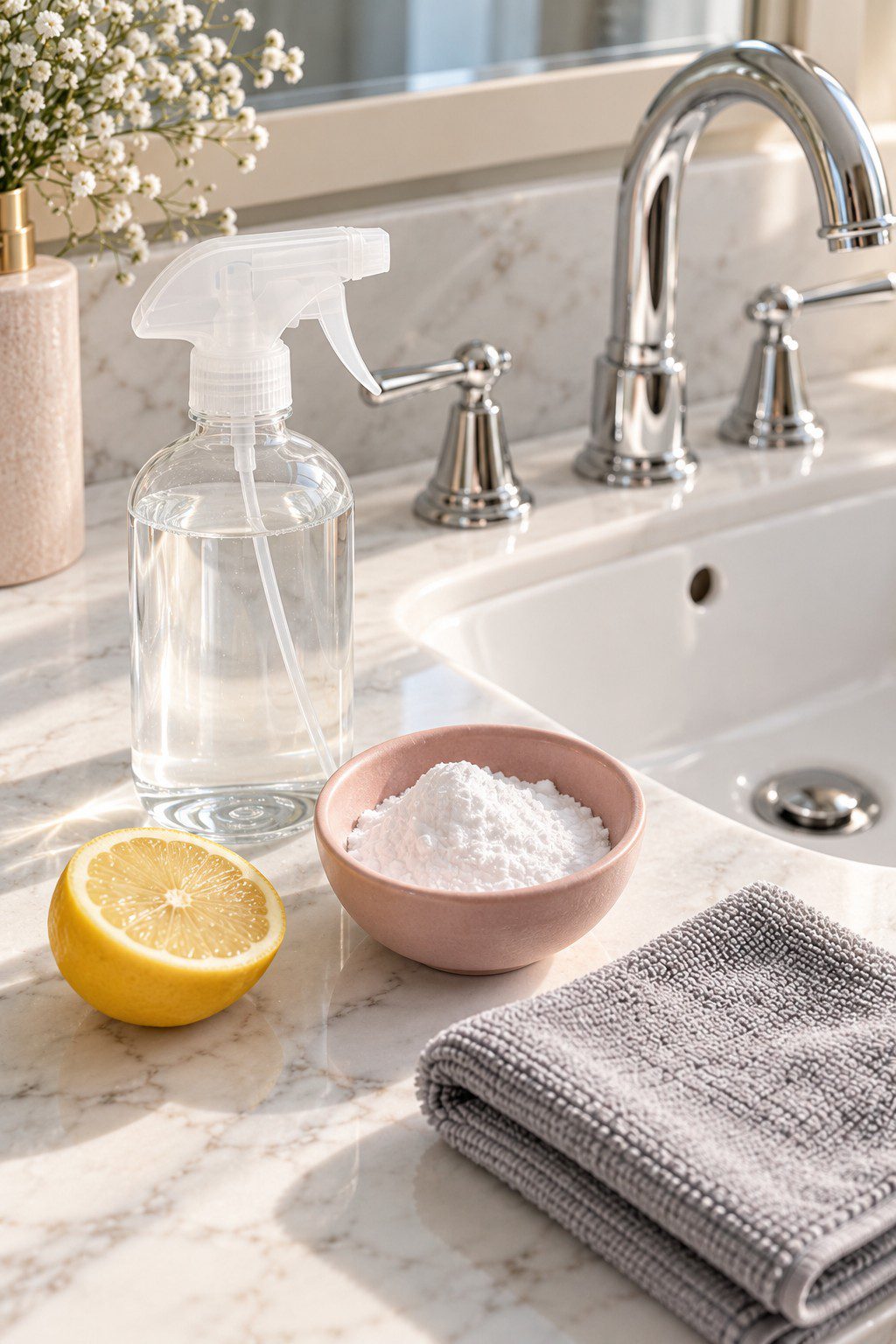
I have used vinegar and baking soda as a homemade bathroom cleaner in my own bathroom, and they worked very well, especially on the stainless steel faucets. The limescale buildup that hard water leaves behind came off easily, which is why this is the first thing I reach for.
A bathroom does not need a cabinet full of sprays. Most day-to-day dirt in a bathroom is soap scum, hard water film and light grime, and two pantry staples, white vinegar and baking soda, handle a lot of it. This guide gives you simple homemade bathroom cleaner recipes, the exact order to use them in, and the mistakes to avoid so you do not damage surfaces or create fumes.
Quick answer: The best homemade bathroom cleaner is a 50/50 mix of white vinegar and water for hard water and light soap scum, plus a baking soda paste for sinks and tubs. Use them one after the other, never mixed with bleach, and skip vinegar on natural stone. For stubborn rust or heavy buildup, a store-bought cleaner works better.
What a homemade bathroom cleaner can and cannot do
Homemade cleaners are good at removing mineral deposits, soap scum and everyday dirt. White vinegar is a mild acid, so it breaks down the chalky film that hard water leaves on glass, faucets and tile. Baking soda is a gentle abrasive, so it lifts grime from sinks and tubs without harsh scrubbing.
What they are not: disinfectants. Vinegar is not a registered disinfectant, so if you need to kill germs, for example after illness, use a disinfectant product and follow the label. Homemade cleaners also struggle with heavy rust and old mold. For those jobs, see Zep vs The Works for hard water rings and rust and how to remove black mold from shower tiles.
What you need for a homemade bathroom cleaner
- White distilled vinegar
- Baking soda
- Dish soap
- A clean spray bottle (label it)
- Microfiber cloths and a non-scratch sponge
- A toilet brush and an old toothbrush for detail work
- A squeegee for shower glass
Safety first: what never to mix
- Vinegar and bleach. This releases chlorine gas, which is dangerous to breathe. Never use them together, and rinse a surface well before switching products.
- Vinegar and hydrogen peroxide in the same container. They form an irritating acid. Use them separately and rinse in between.
- Vinegar and baking soda in a closed bottle. They fizz and cancel each other out. Use one after the other on the surface instead.
The CDC gives the same warning for bleach: never mix bleach with ammonia or any other cleaner.
Open a window or run the fan, and test any new cleaner on a small hidden spot first.
Recipe 1: All-purpose homemade bathroom cleaner spray
Mix: 1 cup white vinegar and 1 cup water in a spray bottle. Add a few drops of dish soap if the surface is greasy.
Use: Spray the sink, counter, faucets and tiles, wait about 5 minutes, then wipe with a damp microfiber cloth. Buff dry to avoid streaks.
This is the one to keep on hand for weekly cleaning. Mix a bottle you will use within a few weeks and keep it out of direct sun.
Recipe 2: Baking soda scrub, a homemade bathroom cleaner for sinks and tubs
Mix: 1/2 cup baking soda with just enough water to make a thick paste. A small squirt of dish soap helps on soap residue.
Use: Spread the paste on a damp sink or tub, scrub gently with a sponge, then rinse well. For stained corners and around the drain, use an old toothbrush. If you want extra shine on a porcelain sink, follow with the vinegar spray and rinse.
Recipe 3: Homemade bathroom cleaner for shower soap scum
Mix: Warm 1/2 cup white vinegar in a microwave-safe cup for about 30 seconds so it is warm, not hot. Pour it into a spray bottle with 1/2 cup dish soap and swirl gently, do not shake hard.
Use: Spray the walls, door and tub, wait 15 to 30 minutes, scrub with a non-scratch sponge, then rinse with warm water. Squeegee the glass afterwards.
Soap scum builds up in layers, so the first deep clean takes the longest. After that, a quick squeegee after each shower keeps the film from coming back.
How to clean the toilet naturally
- Pour 1 cup of white vinegar into the bowl and let it sit for 30 minutes. For light stains, leave it longer.
- Sprinkle in 1/2 cup baking soda.
- Scrub with the toilet brush under the rim and around the waterline.
- Flush.
Clean the seat, lid and base with the all-purpose spray. If a hard water ring or rust stain stays, that is the point to switch to a stronger product.
Hard water spots on glass and faucets
What worked for me: on my stainless steel faucets, vinegar and baking soda removed the limescale buildup very effectively.
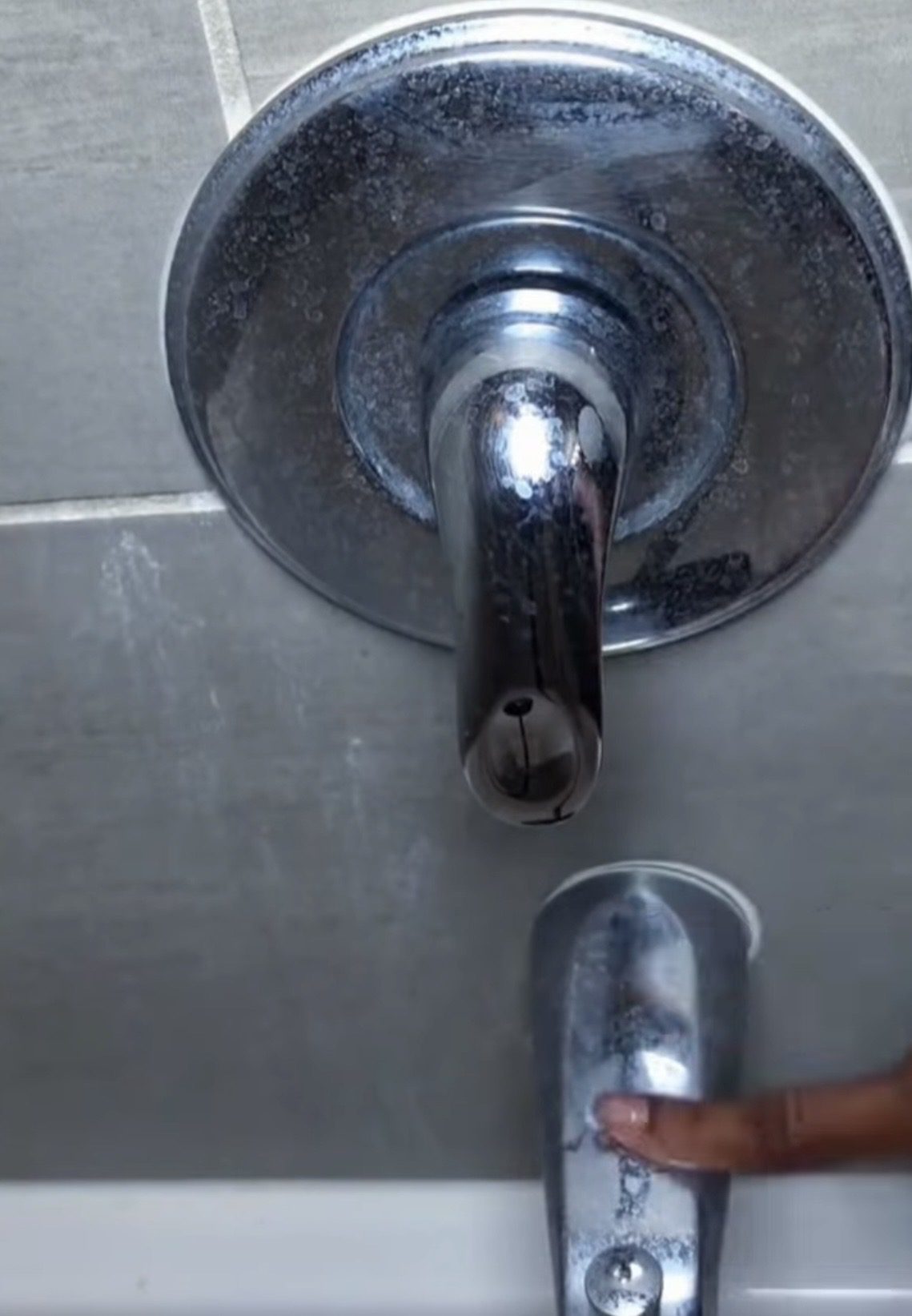
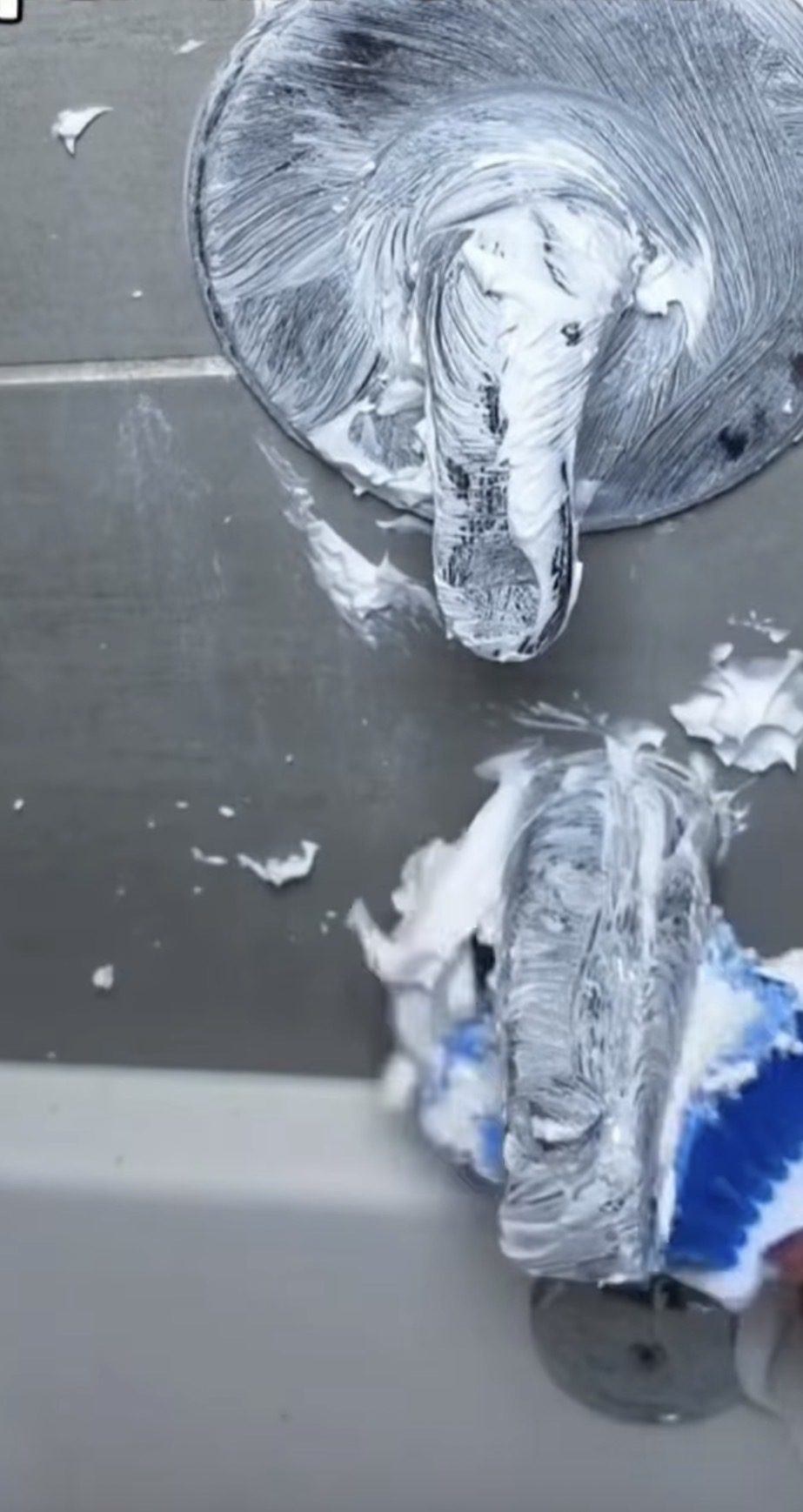
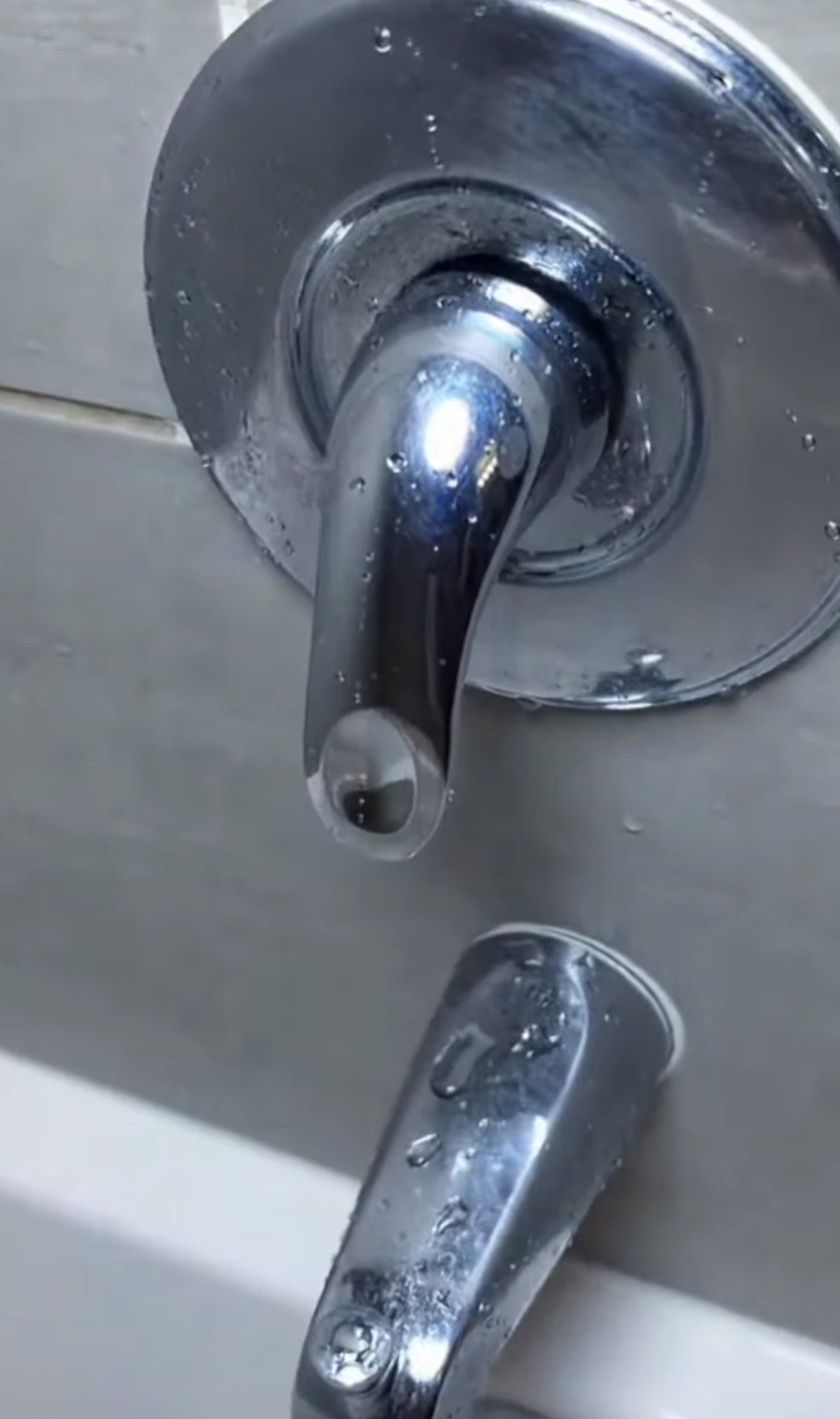
For cloudy shower glass, soak a cloth or paper towel in vinegar, hold it against the glass for about 10 minutes, then wipe and rinse. For faucets, wrap a vinegar-soaked paper towel around the fixture for up to 30 minutes, then wipe and buff. Check your faucet maker’s care instructions first, since some finishes can be damaged by acid.
Where not to use vinegar in a homemade bathroom cleaner
- Natural stone such as marble, travertine and granite. Acid can etch and dull it.
- Unsealed or old grout. Repeated vinegar can wear it down. Use the baking soda paste and rinse well.
- Some metal finishes on faucets and fixtures. Check the care instructions.
- Anything you have not tested. Try a small hidden spot first.
When a store-bought cleaner is the better choice
A homemade bathroom cleaner works for maintenance. Reach for a product when you have heavy buildup, rust or a need to disinfect. Our guide to the 7 bathroom cleaning products you actually need covers what is worth buying and which job each one does.
A simple routine for your homemade bathroom cleaner
- After each shower: squeegee the glass or walls.
- Weekly: spray the sink, counter and toilet exterior, then wipe. Follow the bathroom cleaning checklist to do it in order.
- Monthly: do the shower soap scum recipe and the toilet vinegar soak.
If you want the whole home to stay on track, the weekly home reset checklist fits the bathroom into one simple routine, and these bathroom organization ideas make cleaning faster because there is less to move.
Frequently asked questions
Does vinegar disinfect a bathroom?
No. Vinegar cleans mineral deposits and soap scum, but it is not a registered disinfectant. If you need to disinfect, use a disinfectant product and follow the label.
Can I mix vinegar and baking soda to clean?
They fizz when combined and neutralize each other, so the mix cleans less than either one alone. Use them one after the other instead.
Is a homemade bathroom cleaner with vinegar safe on grout?
Occasional use is usually fine on sealed grout, but repeated use can wear it down. Baking soda paste is gentler for regular cleaning.
How long does homemade bathroom cleaner last?
Vinegar and water keeps well, but it is best to mix a small bottle you will use within a few weeks, label it and store it away from sunlight.
Can I add essential oils?
You can, but they are optional. Ventilate the room, and skip them if you have pets or small children, since some essential oils can be harmful to pets.
Will my bathroom smell like vinegar after using a homemade bathroom cleaner?
The smell fades as the surface dries, especially with the fan on or a window open.