How to Clean a Fabric Couch Without Damaging the Fabric or Leaving Water Marks
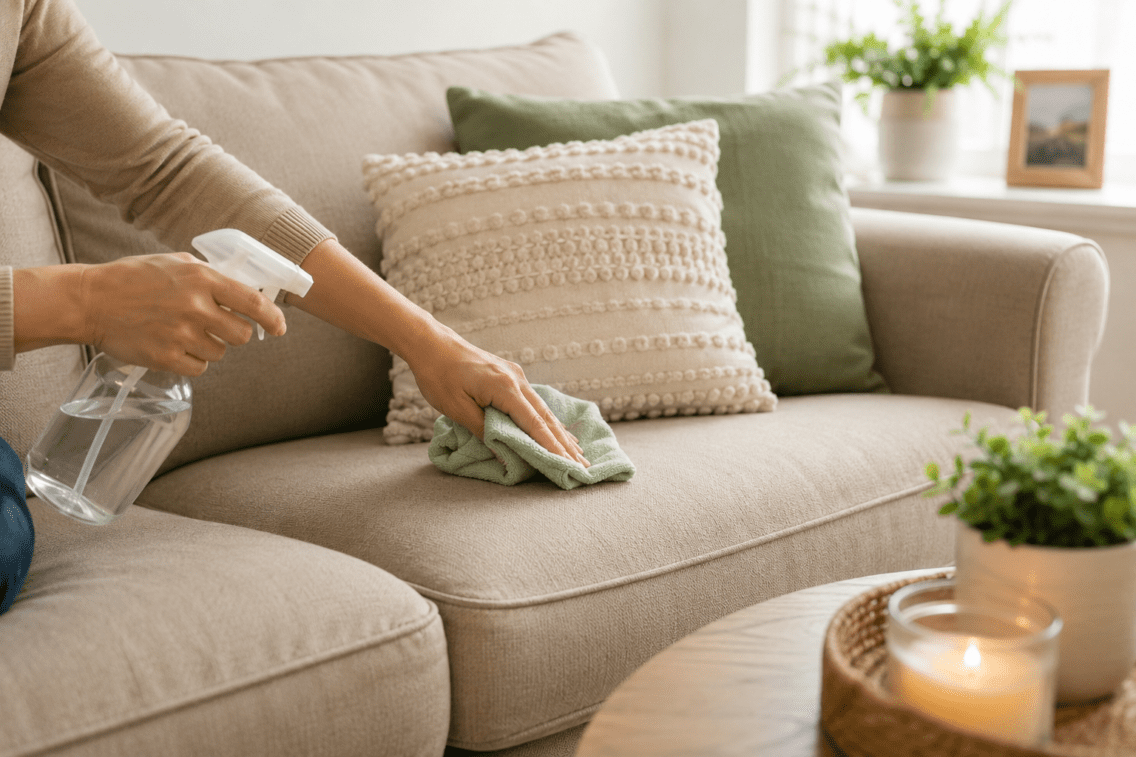
How to clean a fabric couch is one of those things many of us don’t think about until we notice a stain, a strange smell, or the fabric starting to look dull. If you have kids, pets, or simply spend a lot of time on your sofa, it’s amazing how quickly crumbs, spills, and everyday dirt can build up.
I learned this the hard way after spotting what I thought was a small stain on my couch. Once I looked a little closer, I realized there were fingerprints on the armrests, crumbs tucked between the cushions, and a few mystery marks I couldn’t even remember causing. Suddenly, the couch I thought was clean didn’t look so fresh anymore.
The good news is that cleaning a fabric couch doesn’t have to be complicated or expensive. In most cases, you can remove dirt, odors, and common household stains using simple supplies you probably already have at home. The key is knowing the right method so you don’t damage the fabric or leave behind water marks.
In this guide, I’ll show you exactly how to clean a fabric couch, remove common stains, and keep it looking fresh for longer, even in a busy home with kids, pets, and everyday messes.
Before You Start: Check Your Couch’s Cleaning Code
Before using any cleaning solution, take a minute to find your couch’s cleaning code. Most fabric couches have a tag hidden under a cushion or underneath the frame that tells you which cleaning methods are safe to use.
Using the wrong cleaner can cause discoloration, shrinkage, or water stains, so this step is worth checking first.
Here are the most common couch cleaning codes:
W
Couches labeled W can be cleaned with water-based cleaning solutions. These are usually the easiest fabric couches to maintain.
WS
A WS code means you can use either water-based cleaners or solvent-based cleaners. Most modern fabric sofas fall into this category.
S
If your couch has an S code, avoid water-based cleaners. Instead, use a solvent-based upholstery cleaner designed specifically for fabrics.
X
An X code means the fabric should only be vacuumed or professionally cleaned. Using water or cleaning products may damage the material.
Don’t Skip a Spot Test
Even if you know your couch’s cleaning code, it’s always a good idea to test any cleaning solution on a small hidden area first.
I usually test underneath a cushion or on the back corner of the couch and wait a few minutes before cleaning a larger area. It’s a simple step that can save you from accidentally damaging the fabric.
Once you’ve checked the cleaning code, gathered your supplies, and spot-tested your cleaner, you’re ready to start cleaning your fabric couch safely.If you’re unsure what your couch’s cleaning code means, the upholstery cleaning guide from the Institute of Inspection Cleaning and Restoration Certification (IICRC) can help you better understand which cleaning methods are safe for different fabrics.

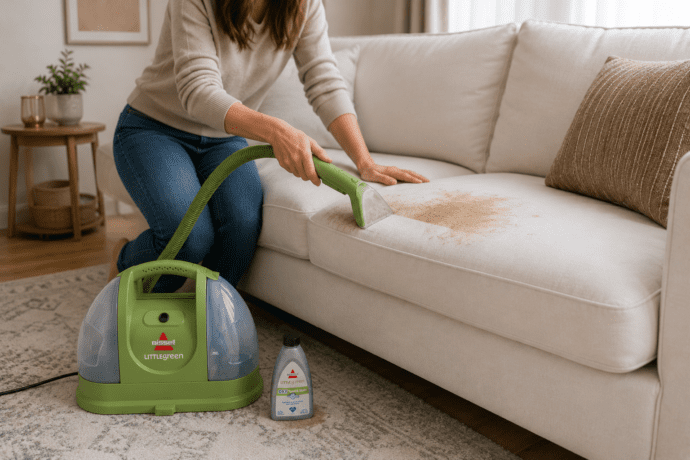
BISSELL Little Green Multi-Purpose Portable Carpet and Upholstery Cleaner
Shop on Amazon
What You’ll Need to Clean a Fabric Couch
The good news is that you don’t need a closet full of specialty products to get great results. For most fabric couches, a few basic household items are enough to remove dirt, freshen the fabric, and tackle common stains.
Here’s what I like to have on hand before I start:
- Vacuum cleaner with an upholstery attachment
- Microfiber cloths
- Warm water
- Mild dish soap
- Spray bottle
- Soft-bristled brush (optional)
- Baking soda for odors
- Clean dry towels
If you’re dealing with a specific stain, you may also need an upholstery cleaner that’s safe for your couch’s cleaning code.
Having everything ready before you begin makes the process much easier and helps prevent over-wetting the fabric while you’re searching for supplies.
Step 1: Vacuum the Entire Couch
Before using any cleaning solution, remove as much loose dirt and debris as possible.
This step may seem simple, but it makes a bigger difference than most people realize. Dust, crumbs, pet hair, and tiny particles often settle deep into the fabric and can turn into muddy streaks if they get wet during cleaning.
Start by removing all cushions and vacuuming:
- The seat cushions
- The back cushions
- The armrests
- The sides and back of the couch
- Underneath the cushions
- Crevices and seams
The seams are usually where the surprises hide. Every time I vacuum my couch, I find at least a few crumbs, bits of lint, or something that somehow disappeared weeks ago.
Take your time during this step. A thorough vacuuming gives you a much cleaner surface to work with and often makes the couch look noticeably better before you’ve even started washing it.
Step 2: Spot-Test Your Cleaning Solution
Before cleaning the entire couch, test your chosen cleaning solution on a small hidden area.
Apply a small amount to an inconspicuous spot, then wait a few minutes for it to dry.
Check for:
- Color fading
- Water marks
- Fabric damage
- Changes in texture
Even if you’ve used the same cleaner before, fabrics can react differently depending on their material and age.
It only takes a few minutes, but this simple precaution can help you avoid a mistake that’s much harder to fix later.
Step 3: Clean the Fabric Without Soaking It
One of the biggest mistakes people make when cleaning a fabric couch is using too much water.
A couch should be cleaned with a lightly damp cloth—not saturated with water.
To make a simple cleaning solution, mix:
- 2 cups warm water
- A few drops of mild dish soap
Dip a microfiber cloth into the solution, wring it out well, and gently wipe the fabric.
Work in small sections and focus on areas that look dirty or stained.
Avoid scrubbing aggressively. In my experience, gentle circular motions work much better than trying to attack a stain with force. Scrubbing too hard can push stains deeper into the fibers and may damage the fabric.
As you clean, use a separate dry cloth to absorb excess moisture.
The goal is to clean the fabric, not soak it.
Step 4: Let the Couch Dry Properly
Once you’ve finished cleaning, allow the couch to air dry completely.
Open windows if possible or use a fan to improve airflow around the furniture.
Avoid sitting on the couch until it’s fully dry.
This is another step that’s easy to rush, but proper drying helps prevent:
- Water marks
- Mildew odors
- Damp spots
- Fabric discoloration
A well-ventilated room can significantly reduce drying time and leave your couch feeling fresh and clean.
How to Remove Common Fabric Couch Stains
Even when you know how to clean a fabric couch, stains can be a little trickier. The sooner you deal with a spill, the better your chances of removing it completely.
One thing I’ve learned over the years is that rubbing a stain usually makes things worse. Blotting gently and working patiently almost always gives better results.
How to Remove Food Stains From a Fabric Couch
Food stains are one of the most common problems, especially in homes with young children.
Whether it’s ketchup, pasta sauce, yogurt, or a dropped snack, start by removing any solid residue with a spoon or paper towel.
Next:
- Blot the area with a clean cloth.
- Mix warm water with a few drops of mild dish soap.
- Dampen a microfiber cloth with the solution.
- Gently blot the stain until it begins to lift.
Avoid soaking the fabric, as excess moisture can leave water marks behind.
How to Remove Chocolate Stains
Chocolate is one of those stains that seems harmless until it melts into the fabric.
First, allow any melted chocolate to harden slightly. Then carefully scrape away as much as possible using a spoon or dull edge.
After that:
- Blot the area with a damp cloth.
- Apply a small amount of dish soap solution.
- Continue blotting until the stain fades.
For older chocolate stains, you may need to repeat the process a few times.Food and drink stains aren’t limited to couches.
If you’re also dealing with stained laundry, you may find my guide on How to Get White Clothes White Again: 7 Easy Methods That Actually Work helpful for restoring dingy whites and tackling stubborn discoloration.
How to Remove Juice and Soft Drink Stains
Colorful drinks can leave noticeable marks on light-colored couches if they’re not cleaned quickly.
If a spill happens:
- Blot immediately with a clean towel.
- Avoid rubbing the stain.
- Use a mild soap-and-water solution.
- Continue blotting until the color transfers onto the cloth.
The faster you act, the easier it is to keep the stain from setting into the fabric.
How to Remove Coffee Stains From a Fabric Couch
Coffee spills happen surprisingly often, especially during busy mornings.
To clean a coffee stain:
- Blot up as much liquid as possible.
- Mix warm water with a small amount of dish soap.
- Gently dab the stained area.
- Use a clean damp cloth to remove any soap residue.
If the stain is older, you may need a fabric-safe upholstery cleaner for better results.
How to Remove Grease and Oil Stains
Grease stains can be more stubborn because oil doesn’t dissolve easily in water.
Start by sprinkling a generous amount of baking soda over the stain.
Let it sit for at least 15 to 30 minutes to absorb excess oil.
Then:
- Vacuum away the baking soda.
- Apply a small amount of dish soap solution.
- Gently blot the area.
- Allow it to dry completely.
This method works well for greasy food stains and oily fingerprints.
How to Remove Pet Stains and Odors
If you have pets, accidents are bound to happen at some point.
First, blot as much moisture as possible using clean towels.
Next:
- Clean the area with a mild soap solution.
- Blot again to remove excess moisture.
- Sprinkle baking soda over the area once it’s mostly dry.
- Let it sit for several hours before vacuuming.
Baking soda can help absorb lingering odors and leave the couch smelling fresher.
A Quick Tip for Old Couch Stains
Old stains are usually more difficult to remove because they’ve had time to settle into the fabric fibers.
If you’re trying to figure out how to clean a fabric couch with stains that have been there for weeks or even months, don’t expect them to disappear instantly. It often takes multiple cleaning sessions to gradually lift older stains without damaging the fabric.
The key is patience. Gentle cleaning repeated over time is usually safer and more effective than using harsh chemicals or aggressive scrubbing.

Fabric Sofa Cleaner, 120ml Deep Cleaning Professional Strength, Couch Cleaner Stain Remover
Shop on Amazon
Couch Cleaner & Stain Remover Spray + Couch Fabric Protector Spray | Clean and Protect Sofas
Shop on Amazon
How to Deodorize a Fabric Couch Naturally
Even if your couch looks clean, it can still hold onto everyday odors from food, pets, and daily use.
One of the easiest ways to freshen a fabric couch is with baking soda.
Simply sprinkle a light layer over the fabric and let it sit for a few hours before vacuuming it away. Baking soda helps absorb odors without using harsh chemicals and can leave your couch smelling noticeably fresher.
If you’re wondering how to clean a fabric couch that smells stale but doesn’t have visible stains, this simple method can make a big difference.Deodorizing your couch is a great start, but it’s only one part of creating a fresher home. If you’re looking for more budget-friendly ways to keep every room smelling clean, you might enjoy How to Make Your House Smell Good All the Time (Without Constantly Buying Candles).
Mistakes to Avoid When Cleaning a Fabric Couch
A few common mistakes can leave your couch looking worse than before:
- Using too much water
- Scrubbing stains aggressively
- Skipping a spot test
- Using products that aren’t safe for your couch’s cleaning code
- Sitting on the couch before it’s fully dry
When in doubt, use less moisture and clean gently.
How Often Should You Clean a Fabric Couch?
For most households, vacuuming your couch once a week and doing a deeper cleaning every 3 to 6 months is enough to keep it looking its best.
Homes with young children, pets, or heavy daily use may benefit from more frequent cleaning.
Regular maintenance prevents dirt from building up and makes future cleaning much easier.Keeping a couch clean is much easier when it’s part of a regular home care routine. I like to tackle small cleaning tasks throughout the week rather than letting everything pile up at once. If you’re trying to create a more manageable household schedule, take a look at My Simple Laundry Routine: How I Organize Washing Days for a Calm, Fresh Home for ideas on keeping your home feeling fresh without spending hours cleaning.
Final Thoughts
Learning how to clean a fabric couch doesn’t have to be complicated. With the right cleaning method, a little patience, and a few basic supplies, you can remove everyday dirt, tackle common stains, and keep your couch looking fresh for years to come.
The most important thing is to clean spills quickly, avoid over-wetting the fabric, and always check your couch’s cleaning code before using any product. A little routine care goes a long way toward protecting one of the most-used pieces of furniture in your home.
FAQ
Can I clean a fabric couch without a steam cleaner?
Yes. Most fabric couches can be cleaned using a vacuum, microfiber cloth, warm water, and a mild cleaning solution.
What is the best homemade fabric couch cleaner?
A mixture of warm water and a few drops of mild dish soap works well for many common stains and everyday cleaning.
How do I remove old stains from a fabric couch?
Old stains often require multiple cleaning sessions. Gently blotting with a fabric-safe cleaning solution is usually more effective than scrubbing aggressively.
Disclosure: This post may contain affiliate links. If you purchase through these links, I may earn a small commission at no additional cost to you. I only recommend products I genuinely believe can be helpful for cleaning and maintaining your home.