The Lunch Packing System That Ended My Morning Chaos
Published: September 2026. 8 min read
📌 Quick Summary: A school lunch packing system is what actually ends the morning scramble, not more willpower. This guide covers the exact containers worth buying, the night-before prep that takes 10 minutes, and the simple rotation that stops “what do I pack today” from being a daily decision.
This post contains affiliate links, including Amazon Associate links. If you purchase through these links, I may earn a small commission at no extra cost to you. I only recommend products I’ve used or would genuinely buy myself.
For the first two years of packing school lunches, I stood in front of the fridge every single morning trying to figure it out from scratch. Some mornings it worked. Most mornings it meant a rushed sandwich, a missing water bottle, and both of us stressed before 8am. Building a real lunch packing system changed that. A real school lunch packing system fixed that, not more effort, just a system that removed the daily decision.
If mornings feel chaotic beyond just lunch, my Back to School Morning Routine post covers the bigger picture. This guide is specifically about the lunch box itself, the containers and the routine that actually makes packing it fast.
Why a Lunch Packing System Actually Works
The problem was never the food. It was deciding what to pack, every single morning, half awake. A real system removes that decision by giving every category, protein, fruit, veggie, snack, one obvious container and a short rotating list, so packing lunch becomes assembly, not creative problem solving.
The Lunch Packing System: Containers Worth Buying
1. A Leak-Proof Compartment Bento Box
This is the foundation of the whole system. Separate compartments mean food doesn’t touch, which matters more to kids than adults usually realize, and a leak-proof lid means one less thing to worry about in a backpack.
👉 Bentgo Kids 5-Compartment Lunch Box
2. A Bento Box With a Built-In Ice Pack
For kids who eat lunch later in the day, or during warmer months, a built-in ice pack means one less item to pack separately, and one less thing that gets left out of the bag on a rushed morning.
👉 Bentgo Chill Kids Lunch Box with Ice Pack
3. Small Reusable Snack Containers
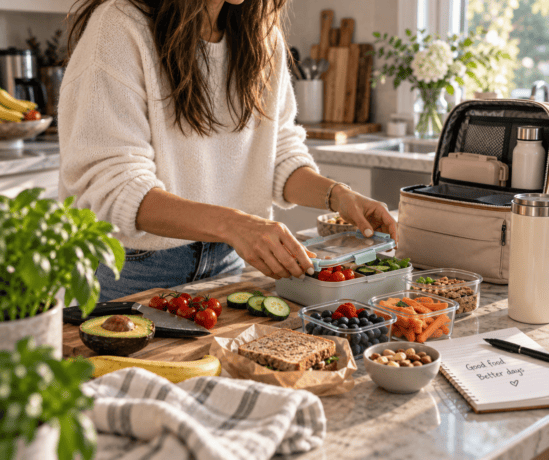
For the fruit, veggie, and snack rotation to actually work, you need containers small enough to prep several at once on a Sunday, not just one big container you refill daily.
👉 Small Reusable Snack Containers, Set of 8
4. An Insulated Food Jar for Hot Lunches
For the days I send leftover soup, pasta, or anything that actually needs to stay warm until lunchtime, a proper insulated food jar makes the difference between a hot meal and a lukewarm one. I fill it with boiling water first, let it sit for a few minutes, then swap in the hot food right before it goes in the bag.
👉 THERMOS FUNTAINER Kids Insulated Food Jar
The Lunch Packing System Night-Before Routine
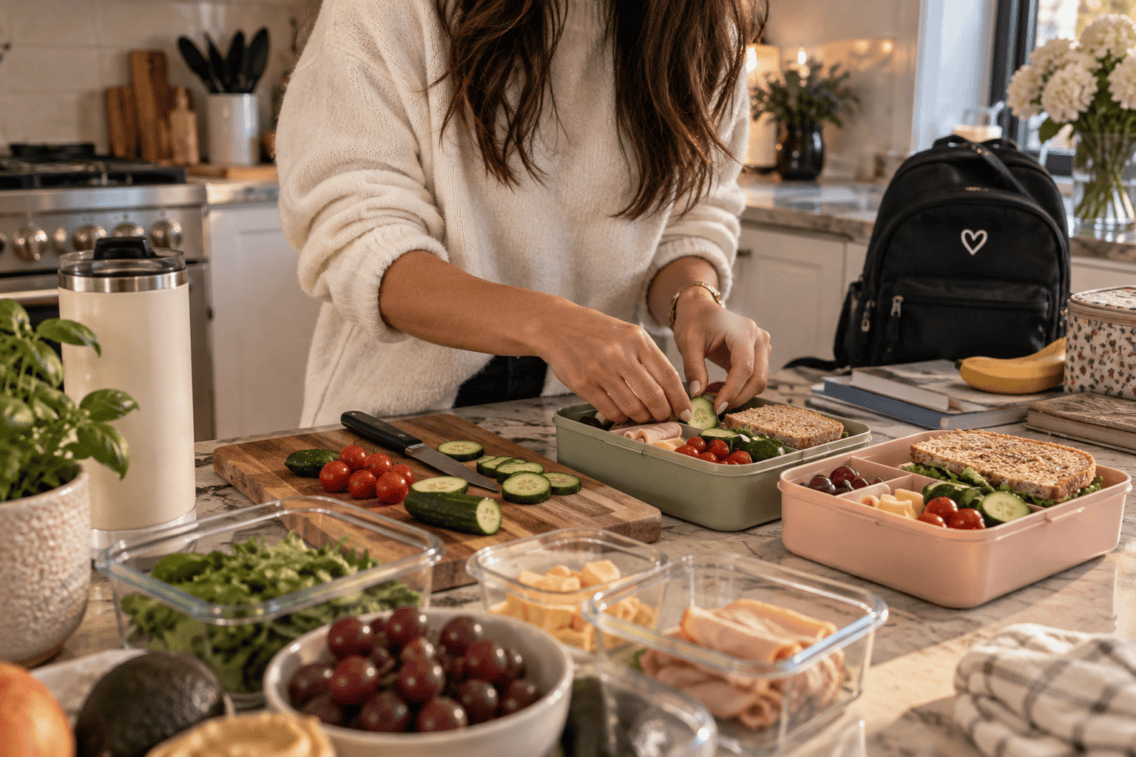
Buying the containers doesn’t fix mornings on its own. What actually changed things was moving lunch prep to the night before, right after dinner cleanup, while the kitchen is already out:
- Fill the protein and snack compartments first. These are the ones that take the most thought, so do them while you still have mental energy left.
- Leave the compartments that need to stay fresh for the morning. Cut fruit or anything that browns overnight gets added right before the bag goes out the door, a tip Healthline’s food prep guide also recommends for keeping cut produce looking fresh.
- Put the packed lunch box in the fridge, not the counter. This one habit is what actually keeps mornings from turning into a search for where it ended up.
The Rotation That Stops Daily Decision Fatigue
Instead of thinking of lunch as one meal to plan, I think of it as four categories with three to four options each: protein, fruit, veggie, and a small treat. Pick one from each category, rotate through the week, and repeat. It sounds almost too simple, but removing the “what should I make” question is what actually makes packing lunch fast.
What I Stopped Doing
Trying to make lunch exciting every single day, for one. Kids mostly want the same handful of foods on repeat, and chasing Pinterest-worthy lunches was the thing that made this feel like a chore instead of a five-minute task. I also stopped buying single-use snack packs. They cost more over time and create clutter that small reusable containers solve just as well.
Keeping the Containers From Falling Apart
Bento boxes and insulated jars only work as a lunch packing system if they survive the school year. A few things that made mine last: hand-washing anything with a silicone seal instead of running it through the dishwasher every day, since heat and detergent wear seals out faster than daily use alone. I also do a quick vinegar rinse on the food jar every week or two, since insulated containers hold onto smells in a way regular containers don’t.
Frequently Asked Questions About This Lunch Packing System
How far in advance can I prep school lunches? Most proteins and shelf-stable snacks can be portioned up to 3-4 days ahead. Fresh fruit and anything that browns is best added the morning of or the night before at most.
What if my kid refuses to eat what I pack? Involve them in choosing from the rotation options on grocery day. Kids are far more likely to eat lunch they picked themselves than one that was a surprise.
Do bento boxes actually keep food fresh until lunchtime? A good leak-proof, compartment-based box keeps most foods fine for a standard school day. For anything that needs to stay cold longer, the built-in ice pack style makes the biggest difference. This lines up with FoodSafety.gov’s guidance on keeping perishable lunch items below 40°F to prevent bacterial growth.
How do I stop forgetting to pack lunch some mornings? Moving prep to the night before and storing the finished lunch box in the fridge solves this almost entirely. It becomes a grab-and-go step instead of a task you have to remember to start.
The Bottom Line
A school lunch packing system doesn’t need to be complicated to actually work. The right containers, a short night-before routine, and a simple rotation instead of daily decisions, that’s the whole system, and it’s the difference between calm mornings and a daily scramble in front of the fridge.
If you’d like more guidance for a simpler, calmer home overall, you can grab my free e-book, The Calm Life: A Year-Round Minimalist Self-Care Guide. 🌿