
Why Your Home Keeps Getting Messy (And How Simple Systems Fix It)

If Your Home Keeps Getting Messy, It’s Not Laziness — It’s Missing Structure
If your home keeps getting messy no matter how often you tidy, the problem likely isn’t laziness, lack of motivation, or not trying hard enough. Most homes don’t struggle because people don’t care — they struggle because there’s no structure supporting daily life.
Even when you clean regularly, reset rooms, and declutter again and again, the mess returns. That’s not failure. It’s feedback. It’s your home signaling that effort alone isn’t enough — what’s missing are systems that quietly work in the background.
Once you understand why your home keeps getting messy, everything changes. A calm home stops being something you constantly chase and becomes something your space naturally supports.

Why Your Home Keeps Getting Messy Isn’t About Laziness
Mess has long been framed as a personal flaw — something tied to discipline, habits, or willpower. But if clutter were truly about laziness, it wouldn’t return so predictably, even in homes where people care deeply about order.
Most mess appears during normal life: getting ready in the morning, cooking meals, coming home after a long day. These aren’t moments of laziness — they’re moments of transition. And transitions need structure.
When a home lacks clear systems, even the most motivated people default to the easiest option: placing things wherever there’s space. Over time, those small decisions stack up, which is exactly why a home keeps getting messy even when you’re doing your best.
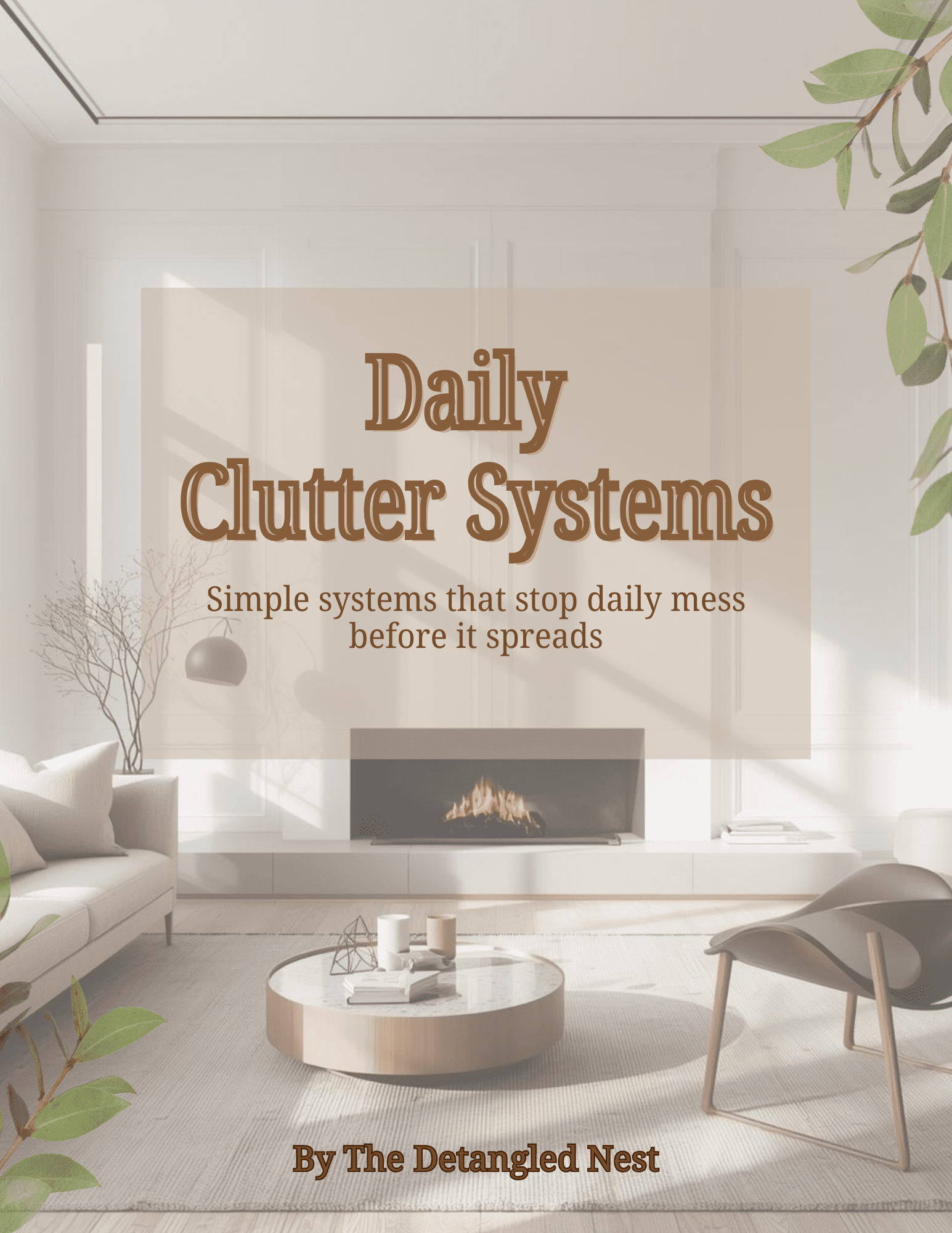
Printable workbook
Daily Clutter Systems
Stop mess before it starts — with simple systems that stick.
- Identify your daily clutter triggers
- Build an entry drop zone + kitchen reset
- Create your own daily clutter plan
Instant download • Personal use only
The Real Problem: Missing Structure
A home without systems asks you to make constant decisions:
- Where should this go?
- I’ll deal with it later.
- I’ll put it away tomorrow.
Those tiny decisions create mental fatigue. And when decision fatigue builds, clutter follows.
Structure removes that burden. When your home clearly tells you where things belong — consistently and intuitively — tidying stops feeling like work and starts feeling automatic.
This is why understanding daily clutter systems is so powerful. When structure exists, effort decreases. Your home begins to support you instead of demanding more from you.


What Happens When Systems Are Missing
When structure is missing, clutter doesn’t just affect how your home looks — it affects how it feels.
- You spend more time searching for things
- Cleaning takes longer than it should
- Small messes grow into overwhelming ones
- You feel behind before the day even starts
Over time, this creates the belief that a calm home is unrealistic. But the truth is simpler: your home keeps getting messy because it isn’t designed around how you actually live.


Laundry Basket with Lid, Clothes Hampers for Laundry with Bamboo Handles and A Removable Bag
Shop on AmazonHow Simple Systems Reduce Daily Clutter
A system doesn’t need to be complicated to work. In fact, the simpler it is, the more likely it is to last.
Every system answers one clear question:
What happens to this item when it’s not being used?
- Keys have a hook
- Mail has one defined landing spot
- Shoes return to the same place every day
- Bags have a home they always come back to
When the answer is obvious, clutter has nowhere to grow.
The most effective systems:
- Match real habits (not ideal ones)
- Are easy to use when you’re tired
- Require minimal effort to maintain
This is why structure matters more than perfection. A functional system will always beat a beautiful one that’s hard to keep up with.


Small Changes That Make a Big Difference
You don’t need to overhaul your entire home to stop daily clutter. Start where the mess shows up most often.
Ask yourself:
- Where does clutter pile up first?
- When does my home usually get messy?
- What decision feels annoying to make every single day?
Then build one small system to solve that specific problem:
- A basket by the door
- A tray on the counter
- A drawer organizer
- A simple routine attached to an existing habit
These small shifts reduce friction — and friction is the real reason a home keeps getting messy.
Research shows that cluttered environments increase stress and mental fatigue — studies shared by Psychology Today explain how physical surroundings directly affect emotional well-being and daily focus

How This Connects to Simplifying Your Home
Once systems are in place, simplifying becomes easier. You stop fighting clutter and start preventing it.
This is where structure and simplicity meet. When systems support your daily life, you naturally keep less, move with more intention, and maintain calm with far less effort.
For a deeper look at how structure and simplicity work together, this pillar guide on simplifying your home explores realistic, sustainable changes that support calm living long-term.
If your home keeps getting messy despite your best efforts, Daily Clutter Systems: The Hidden Reason Mess Isn’t Laziness (It’s Missing Structure) explains how simple, realistic systems can quietly support your daily life and prevent clutter before it spreads.

Conclusion: Calm Comes From Support, Not Effort
A messy home isn’t a reflection of who you are. It’s a reflection of how well your space supports your life.
When you stop blaming yourself and start building structure, everything shifts. Systems remove friction. Structure replaces stress. And calm stops being something you constantly try to maintain.
You don’t need more motivation.
You don’t need to try harder.
If your home keeps getting messy, what you need is a home that works with you — not against you.
And once that structure is in place, simplicity follows naturally.