
Why Your Home Feels Hard to Maintain (Even When You Try Your Best)
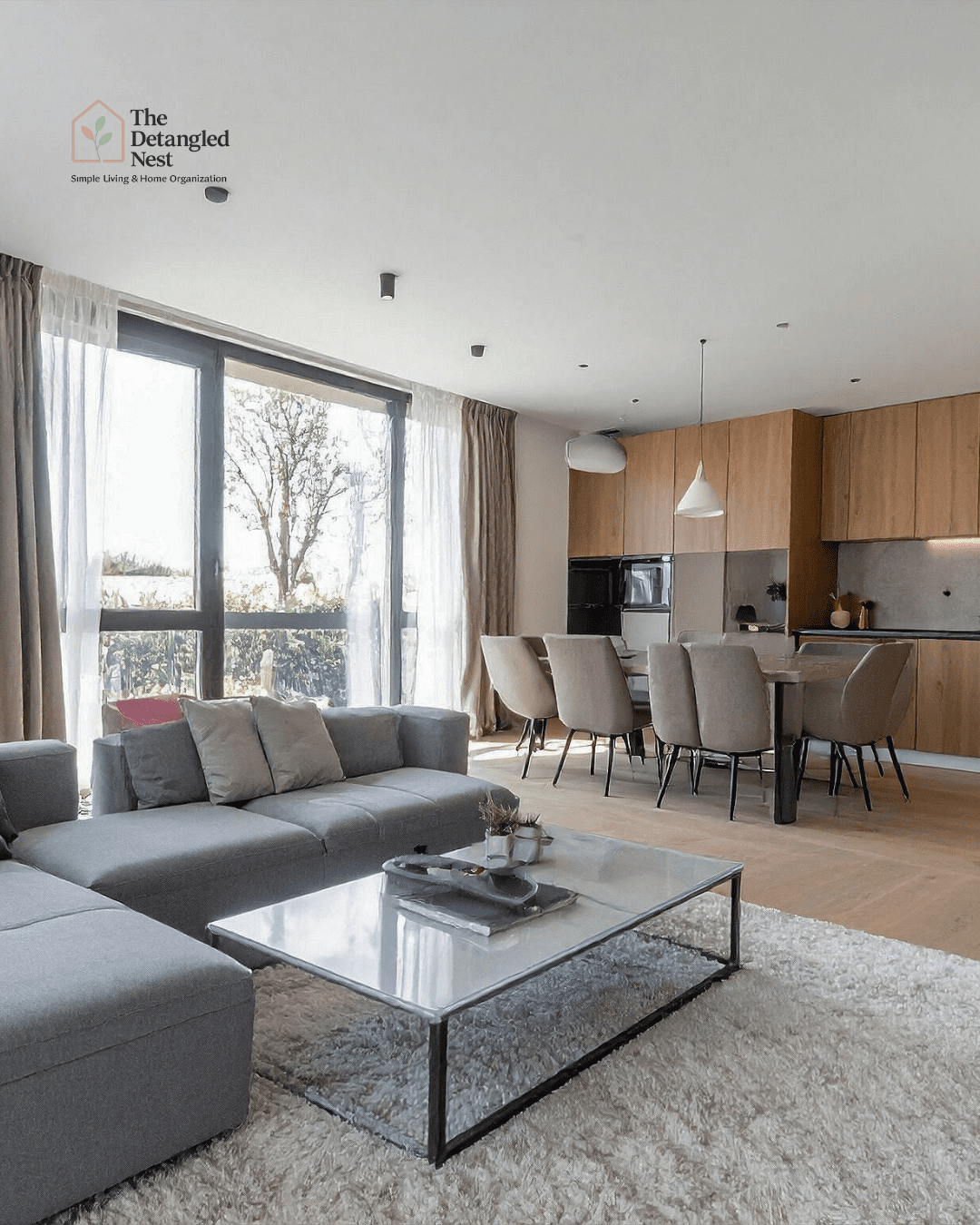
No matter how much effort you put in, your home still feels hard to maintain.
You clean. You tidy. You reset the space. And for a short moment, everything feels calm — until life moves forward again. Shoes appear by the door, papers land on the counter, laundry piles up faster than you expected. And suddenly, the home you worked so hard to manage feels heavy again.
For a long time, I believed the problem was me. I thought I wasn’t consistent enough, organized enough, or disciplined enough to keep my home under control. I kept trying harder — longer cleaning sessions, stricter routines, more resets. But the harder I tried, the more frustrated I became.
That’s when I realized something important:
If your home feels hard to maintain, it’s rarely because you’re doing something wrong.
It’s usually because your home is asking you to rely on effort instead of structure.
A home that depends on motivation, memory, and constant tidying will always feel hard — even when you try your best. And this is why so many people feel exhausted by their spaces, not because they’re messy, but because their homes aren’t supporting daily life.
In this article, we’ll explore why your home feels hard to maintain, what’s actually creating that constant friction, and the small shift that makes maintaining order feel lighter — without decluttering everything or starting over.

Why Your Home Feels Hard to Maintain (Even When You Try Your Best)
There’s a quiet frustration that builds when you feel like you’re doing everything right — cleaning regularly, putting things away, trying to stay on top of routines — and yet your home still feels hard to maintain.
I know this feeling well, because for a long time I blamed myself for it.
I thought maybe I wasn’t consistent enough. Maybe I needed better habits. Maybe other people just had more discipline than I did. But the truth is, why your home feels hard to maintain often has very little to do with effort — and everything to do with how your space is set up to support daily life.
When a home relies on memory, motivation, and constant decision-making, it becomes exhausting to keep up. Every item asks a question. Every surface becomes a temporary stop. And by the end of the day, even a “clean” home can feel heavy.
What finally changed things for me wasn’t cleaning more — it was noticing where things naturally wanted to land, and why. Once I stopped fighting my home and started listening to it, maintaining order felt lighter. Not perfect. Just easier.
And that’s the shift most homes are missing.


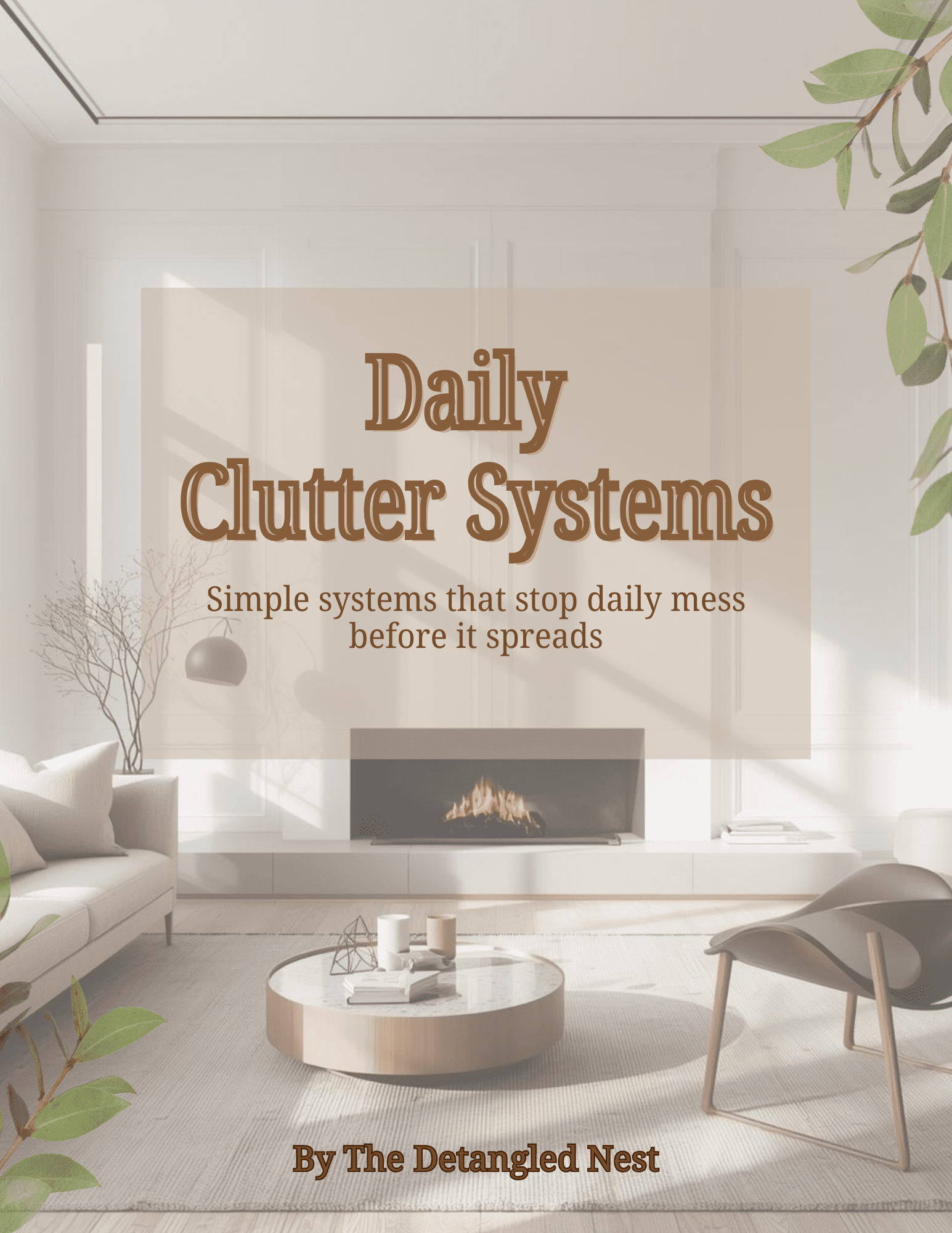
Printable workbook
Daily Clutter Systems
Stop mess before it starts — with simple systems that stick.
- Identify your daily clutter triggers
- Build an entry drop zone + kitchen reset
- Create your own daily clutter plan
Instant download • Personal use only
Why Your Home Feels Hard to Maintain During Real Life
One of the main reasons why your home feels hard to maintain is that most advice is designed for ideal days — not real ones.
On calm days, when there’s time, energy, and no interruptions, almost any home can feel manageable. I’ve had those days too. Surfaces stay clear, things go back where they belong, and it feels like the system is finally working.
But real life doesn’t operate in ideal conditions.
Kids come home tired. Groceries arrive late. Shoes are kicked off instead of placed neatly. Papers land wherever there’s space, not where they’re “supposed” to go. And suddenly, the home feels heavy again.
For a long time, I thought this meant I was failing. That why my home feels hard to maintain must be because I wasn’t disciplined enough, consistent enough, or trying hard enough.
But the truth is simpler — and much kinder.
A home feels hard to maintain when it depends on you being focused, motivated, and uninterrupted all the time.
Real homes don’t work that way.
Real homes need support systems that function when you’re tired, when you’re rushed, and when the day doesn’t go as planned. When order only works on good days, it will always fall apart on real ones.
That’s not a personal failure.
That’s a structural one.


The Real Problem Isn’t Mess — It’s Decision Fatigue
One of the biggest reasons why your home feels hard to maintain isn’t the mess itself — it’s how many decisions your home asks you to make every single day.
Every item without a clear place creates a question:
Where does this go?
Do I deal with this now or later?
Is this supposed to live here?
When those questions repeat all day long, your energy gets drained — even if the house doesn’t look “that messy.” By the evening, you’re not lazy or careless. You’re mentally exhausted.
This is why homes fall apart at night.
Not because people stop caring — but because decision fatigue takes over.
A home that depends on constant decisions will always feel hard to maintain, no matter how often you clean it. Order can’t survive when your brain is overloaded.
And this is exactly why effort alone never works long-term.


Laundry Basket with Lid, Clothes Hampers for Laundry with Bamboo Handles and A Removable Bag
Shop on Amazon
The Real Reason Maintenance Feels Exhausting
One of the main reasons why your home feels hard to maintain isn’t mess itself — it’s the constant need to decide.
Decide where something goes.
Decide when you’ll deal with it.
Decide if it matters enough right now.
That decision-making never stops.
I noticed this in my own home: even on days when things looked “fine,” I still felt tired by the space. Not because it was dirty — but because my brain was always on. Every room was quietly asking me questions.
When a home doesn’t guide behavior, it relies on mental effort instead. And mental effort is the fastest way to burnout.
This is why maintenance feels heavy even for people who clean regularly. You’re not maintaining a space — you’re managing decisions all day long.
Once you see this, it becomes clear:
the problem isn’t that your home needs more attention.
It’s that it needs less thinking.


What Actually Makes a Home Easier to Maintain
Once you understand that decision fatigue is the real problem, the solution becomes much clearer.
A home stops feeling hard to maintain when it stops asking you to decide everything in the moment.
Think about the items that create the most friction in your day:
– things you use daily
– things that move from room to room
– things that never seem to have a clear place
These aren’t “messy” items. They’re homeless items.
When something doesn’t have a clear, obvious place to land, it will always end up wherever is easiest in the moment. That’s why surfaces refill so quickly and why maintaining order feels like a losing battle.
What changes everything is not cleaning more — it’s deciding once.
Deciding:
-
where keys land every time
-
where bags go when you walk in
-
where papers pause before they’re handled
Once those decisions are made, your home no longer depends on your energy level to function. It starts guiding behavior instead of reacting to it.
This is the moment when why your home feels hard to maintain begins to shift — not because life gets calmer, but because your space becomes more supportive.


Tineco Floor ONE S5 Smart Cordless Wet Dry Vacuum Cleaner and Mop for Hard Floors
Shop on Amazon
The Small Shift That Makes Your Home Easier to Maintain
If your home feels hard to maintain, the solution isn’t more cleaning or stricter routines.
It’s one small but powerful shift:
stop managing mess, and start supporting flow.
What finally changed things for me was realizing that my home wasn’t “failing” — it was reacting exactly as designed. Items kept piling up in the same spots because those spots made sense in real life. Bags landed near the door. Papers stayed on the counter. Clothes gathered on chairs.
Instead of fighting that, I started asking a different question:
What does daily life already do here?
When you align your home with real behavior — not ideal behavior — maintaining it becomes easier almost automatically. You don’t need to remind yourself as much. You don’t need long resets. The home starts guiding you instead of resisting you.
This is why why your home feels hard to maintain often has nothing to do with effort — and everything to do with friction.
Remove friction, and maintenance stops feeling like a constant uphill task.


When Your Home Depends on You Instead of Supporting You
One of the clearest reasons why your home feels hard to maintain is that it depends almost entirely on you.
Your memory.
Your energy.
Your motivation.
Nothing is actually holding the space together except your constant effort.
When systems are missing, your home silently relies on you to:
-
remember where things should go
-
notice clutter before it piles up
-
reset rooms again and again
-
“stay on top of it” every single day
That kind of home will always feel heavy — not because you’re failing, but because no one can sustain that level of attention forever.
I noticed this when I realized that my home only worked on days when I was calm, focused, and had time. The moment I was tired or distracted, everything unraveled. That was my sign that the problem wasn’t discipline — it was design.
A home that needs you to constantly manage it will always feel hard to maintain.
A home that supports daily life reduces the need for effort.
And that difference changes everything.
Final Thoughts: Why Your Home Feels Hard to Maintain (and How to Change That)
If your home feels hard to maintain, it’s not because you’re careless, lazy, or failing at routines. It’s because your space is asking you to rely on effort instead of support.
A home that depends on constant motivation will always feel heavy. A home that’s built on structure quietly carries you through real life — even on tired days, messy days, and unfinished days.
When you stop trying to “keep up” and start reducing daily decisions, something shifts. Maintaining your home stops feeling like a battle and starts feeling manageable again. Not perfect. Not effortless. Just lighter.
If this perspective resonated, you might find it helpful to explore Daily Clutter Systems, where I explain how simple structures prevent mess before it starts and reduce the mental load that makes homes feel overwhelming. You may also enjoy 5-Minute Declutter, a gentle approach for creating calm without long cleanups or pressure.
For a deeper look at how environment and decision fatigue affect stress levels, this article from Mindful.org offers helpful research-backed insight into why simplicity and predictability support mental well-being.
You don’t need to overhaul your home.
You don’t need more discipline.
You need fewer decisions — and a home that works with you, not against you.
That’s when maintaining order finally starts to feel possible.
Affiliate Disclaimer
Some links in this post may be affiliate links. This means that if you choose to make a purchase through these links, I may earn a small commission at no extra cost to you. I only recommend products and resources that I genuinely believe support a calmer, more functional home. Thank you for supporting my work — it allows me to keep creating helpful content for you 🤍


1 Comment