The One Change to Make Your Home Feel Easier (Without Decluttering)
There was a time when my home wasn’t exactly messy — but it felt hard.
Hard to keep up with. Hard to reset. Hard to enjoy.
No matter how often I tidied, the same pressure came back. Surfaces filled up again. Small messes repeated themselves. And I kept thinking the problem was clutter — that if I just decluttered more, everything would finally feel lighter.
But that wasn’t the truth.
What I eventually realized is this:
Most homes don’t feel overwhelming because there’s too much stuff.
They feel overwhelming because daily life doesn’t flow easily.
If you’ve ever thought, “Why does my home feel exhausting even when it’s not that messy?” — you’re not alone. And you’re not doing anything wrong.
This post isn’t about decluttering.
It’s about the one shift that quietly changes how your home feels — without getting rid of everything, without starting over, and without adding more to your plate.
If your goal is to make your home feel easier, calmer, and more supportive of real life, this is where that change begins.
Why So Many Homes Feel Hard to Manage (Even When They’re Not Messy)
Here’s something most people don’t talk about enough:
a home can look fine and still feel exhausting.
I’ve felt this myself. There were days when my house wasn’t messy, yet it didn’t make my home feel easier to live in. Instead, it constantly asked for attention — small resets, repeated decisions, endless little fixes that never seemed to end.
That heaviness doesn’t come from clutter alone.
It comes from friction.
Friction shows up when:
-
the same small messes repeat every day
-
items don’t have a clear place to land
-
routines depend on effort instead of structure
-
the home needs constant “catching up” to function
When life is busy, these tiny moments add up quickly. You find yourself picking up the same items again and again, resetting the same spaces every night, and making the same decisions on repeat.
That’s when a home starts to feel hard —
even though nothing looks that wrong on the surface.
Many people believe the solution is to declutter more. But decluttering alone doesn’t always make your home feel easier. It removes items, yes — but it doesn’t change the daily patterns that keep creating friction in the first place.
And once you understand this, something important shifts.
You stop blaming yourself for not “keeping up.”
You stop chasing endless clean-ups.
And you start looking for changes that actually make daily life feel lighter.


The Real Problem Isn’t Clutter — It’s Daily Friction
Many people believe the reason a home feels overwhelming is clutter. Too many items. Too much stuff. Not enough decluttering. But in reality, clutter is rarely the true problem — it’s only the visible symptom.
What actually makes your home feel heavy is daily friction.
Daily friction is the constant, low-level resistance you feel as you move through your space. It’s the small pauses, repeated decisions, and unfinished loops that quietly drain your energy throughout the day. You might not even notice them at first, but together, they shape how your home feels.
This is why decluttering alone doesn’t always make your home feel easier.
You can clear surfaces, donate items, and tidy rooms — yet still feel tense, behind, or mentally cluttered. That’s because the friction remains.
Examples of daily friction often look like this:
-
Not knowing where things should go
-
Moving the same items from one surface to another
-
Making the same small decisions over and over
-
Feeling like you’re constantly “catching up” at home
Each of these moments adds weight. Not physical weight — mental weight.
When daily friction is high, even a tidy home can feel hard to live in. When daily friction is reduced, your home begins to support you instead of demanding constant effort. And that shift is what truly helps make your home feel easier, even without decluttering everything you own.
This is also why lasting calm doesn’t come from doing more. It comes from removing the points where your home quietly works against you.
In the next section, I’ll share the one specific change that reduces daily friction more than decluttering — and why it has such a powerful effect on how your home feels day to day.
The One Change That Makes Your Home Feel Easier (Without Decluttering)
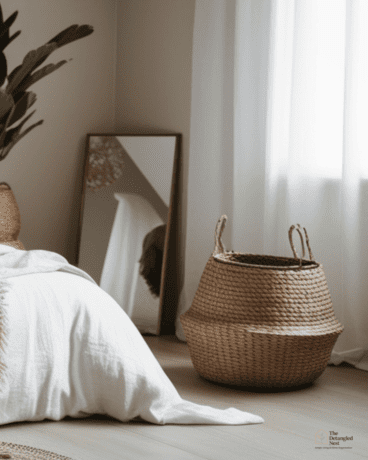
The one change that truly helps make your home feel easier isn’t getting rid of more things — it’s giving everyday items a clear, repeatable landing place.
Not a perfect system.
Not a Pinterest-worthy setup.
Just one obvious place where things naturally go every single time.
Most homes don’t feel hard because they have too much stuff. They feel hard because everyday items don’t know where to land. So they float — from counter to chair, from table to shelf — creating constant visual and mental noise.
When something doesn’t have a clear home, your brain has to decide:
-
Where should I put this?
-
I’ll deal with it later
-
I’ll move it for now
Those tiny decisions happen dozens of times a day. And each one adds friction.
This is why adding structure — not removing items — is often the fastest way to make your home feel easier.
Why “Landing Places” Matter More Than Decluttering
Decluttering removes items.
Landing places remove decisions.
When an item has a clear landing place:
-
It gets put away faster
-
It stops moving around the house
-
It doesn’t become visual clutter
-
It doesn’t linger in your mind
And most importantly — it stops asking something from you.
You’re no longer negotiating with your space. You’re moving through it.
I noticed this shift in my own home when I stopped asking, “How can I keep this space tidy?”
And started asking, “Where should this naturally land?”
That one change reduced more stress than hours of decluttering ever did.
This Is What Actually Makes a Home Feel Easier
A home feels easier when:
-
Items return to the same place without effort
-
Surfaces don’t collect “in-between” objects
-
You don’t need motivation to reset a space
-
Tidying feels automatic, not emotional
This isn’t about control. It’s about support.
When your home supports real habits — tired habits, busy habits, distracted habits — it becomes lighter to live in. And that’s what helps make your home feel easier, even on days when you have no energy to clean or organize.


How Daily Landing Places Reduce Mental Load (Without Adding Work)
One of the fastest ways to make your home feel easier is reducing how much your brain has to manage throughout the day.
Mental load isn’t just about tasks — it’s about unfinished decisions.
Every time you put something down “for now,” your brain keeps it open:
-
I still need to deal with that
-
I’ll move it later
-
I shouldn’t forget this
Those thoughts don’t disappear. They stack.
Daily landing places close those loops immediately.
When something has a clear place to land, your mind doesn’t have to hold onto it. The decision is already made.
Why Your Home Feels Heavy Even When It’s “Not That Messy”
Many homes look fine on the surface but still feel exhausting to be in. That heaviness usually comes from:
-
Items without a clear home
-
Objects that move around daily
-
Surfaces that collect “temporary” things
-
Spaces that require constant micro-decisions
This is why you can clean, reset, and tidy — and still feel overwhelmed an hour later.
The problem isn’t effort.
It’s missing structure.
And structure is exactly what helps make your home feel easier without needing more time or motivation.
Landing Places Remove Decision Fatigue
Decision fatigue builds when your brain is forced to repeatedly answer:
-
Where does this go?
-
What should I do with this?
-
Do I need this now?
Landing places answer those questions before they appear.
Keys → one hook
Mail → one tray
Bags → one basket
Shoes → one spot
When the answer is obvious, your body follows automatically — even on tired days.
This is the same principle behind effective daily clutter systems:
structure does the work, not willpower.
Why This Works Better Than Decluttering
Decluttering asks you to:
-
Make emotional decisions
-
Let go
-
Sort
-
Commit time and energy
Landing places ask only one thing:
👉 Where does this naturally go when I’m done using it?
That’s why this one change works even when:
-
You’re overwhelmed
-
You’re busy
-
You don’t feel motivated
-
You don’t have time to “organize”
And that’s exactly why it helps make your home feel easier — not perfect, just lighter to live in.


Laundry Basket with Lid, Clothes Hampers for Laundry with Bamboo Handles and A Removable Bag
Shop on Amazon
The One Area to Start With So Your Home Feels Easier Immediately
If you want to make your home feel easier fast, don’t start with the whole house.
Don’t start with decluttering.
And definitely don’t start with storage bins.
Start with the first place clutter lands every single day.
For most homes, that’s:
-
the entryway
-
a surface near the door
-
a kitchen counter close to where you walk in
This area sets the tone for everything that follows.
Why the Entry Zone Matters More Than Any Other Space
The moment you walk into your home, your brain registers whether the space feels supportive or chaotic.
If the first thing you see is:
-
bags on the floor
-
mail on the counter
-
shoes scattered
-
coats with nowhere to go
your nervous system stays “on.”
Even if the rest of the house is tidy, this one friction point is enough to make your home feel hard to manage.
That’s why improving this zone is one of the fastest ways to make your home feel easier — without touching the rest of the house.
What This Area Actually Needs (Hint: It’s Not More Storage)
Most people think the solution is:
❌ bigger cabinets
❌ more shelves
❌ prettier decor
But what this area really needs is clarity.
Ask one simple question:
What do we naturally drop here every day?
Usually the answer is:
-
keys
-
bags
-
shoes
-
mail
Each of those items needs one obvious landing place — not multiple options.
One hook.
One tray.
One basket.
That’s it.
When the landing place is obvious, the habit becomes automatic.
Why This One Change Makes the Whole Home Feel Easier
Once the entry zone is supported:
-
clutter stops spreading inward
-
surfaces stay clearer without effort
-
daily resets take minutes instead of energy
-
your home starts the day calmer — and ends it calmer
This is the moment many people notice a shift and think:
Why does my home suddenly feel easier to live in?
Because you removed friction at the source.
Not by working harder — but by designing better.
A Quick Self-Check Before You Move On
If you want this change to actually stick, check this:
-
Can every daily item land somewhere without thinking?
-
Is the landing place visible and easy to reach?
-
Would this still work on a tired, busy day?
If the answer is yes, you’re doing it right.
This single adjustment is often enough to make your home feel easier even if nothing else changes yet.

Why This One Change Works Even When You’re Tired or Overwhelmed
This change works because it doesn’t ask you to do more — it removes effort.
When you want to make your home feel easier, the goal isn’t motivation. It’s reducing decisions.
On tired days, your brain doesn’t want to choose:
-
Where should this go?
-
I’ll deal with it later
-
I’ll clean it up tonight
A clear landing spot removes all of that.
You walk in → you drop the item → you’re done.
No thinking. No planning. No follow-up.
That’s why this single shift works even when:
-
you’re busy
-
you’re low-energy
-
life feels full
Ease comes from less friction, not more discipline.
Printable workbook
Daily Clutter Systems
Stop mess before it starts — with simple systems that stick.
- Identify your daily clutter triggers
- Build an entry drop zone + kitchen reset
- Create your own daily clutter plan
Instant download • Personal use only
How This One Change Supports the Rest of Your Home
When you create one intentional landing spot, you’re not just organizing objects — you’re building structure.
And structure is what actually makes your home feel easier, not constant decluttering.
This small change becomes the foundation that allows other systems to work naturally, without forcing new routines.
For example, this idea connects directly with the concept behind Daily Clutter Systems — where mess isn’t caused by laziness, but by missing structure between daily transitions. When your home supports how life actually flows, clutter stops forming before it starts.
👉 (internal link: Daily Clutter Systems: The Hidden Reason Mess Isn’t Laziness)
It also supports the mindset of practical self-care. Reducing daily friction at home is a form of care — not the aesthetic kind, but the kind that protects your mental energy. Small environmental changes help you stay calmer, clearer, and less overwhelmed throughout the day.
👉 (internal link: Practical Self-Care: Gentle Habits for Calm, Balance, and Mental Clarity)
If you’re raising a family, this one change quietly supports simpler routines with kids too. When items have a clear place to land, mornings and evenings become less chaotic, and expectations feel easier to follow for everyone.
👉 (internal link: 15 Essential Minimalist Parenting Habits)
A Note on Why This Matters (External Insight)
Research shows that clutter and visual overload increase cognitive load and stress levels, making it harder for the brain to relax — even when we’re resting. Creating simple, predictable systems in the home reduces this mental strain and supports emotional regulation.
👉 (external link: Psychology Today – articles on clutter & stress)
Final Thought
You don’t need to reset your entire home to make it feel lighter.
One intentional change — one clear landing spot — can quietly reshape how your space works for you.
And once your home feels easier, everything else becomes easier to maintain too.